
Madagascar Airlines (MD, Antananarivo) has signed lease extension agreements with lessor Abelo Capital Aviation for two ATR72s as it continues to stabilise its fleet.
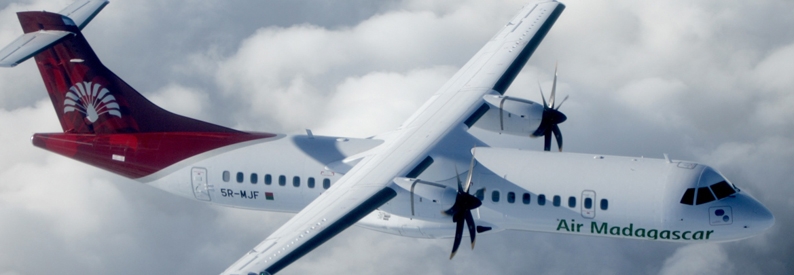
According to a joint press release from the airline and lessor, the agreement will see the lease for ATR72-500 5R-MJF (msn 698) extended to January 2028, while ATR72-600 5R-EJB (msn 1248) will continue to operate for the airline until November 2029.
According to ch-aviation data, 5R-EJB is 10.1 years old and was first delivered to Air Madagascar in June 2015 before joining Madagascar Airlines' technical subsidiary Tsaradia in July 2018. Configured with 72 seats in an all-economy layout, the unit joined the Madagascar Airlines fleet in May 2024. The turboprop "is currently undergoing a heavy scheduled check and will be back to service at the end of July", an airline spokeswoman told ch-aviation.
5R-MJF, in turn, is 22.7 years old and was first delivered to Air Madagascar in December 2005 before being transferred to Tsaradia in 2020. It has 70 seats in a single-cabin layout. Both aircraft are owned and managed by Abelo.
The carrier's fleet comprises nine aircraft, namely five ATR72-500s, one ATR72-600, and three DHC-6-300s. The airline confirmed to ch-aviation that five of the turboprops are currently in service.
The extended leases are in line with the carrier's plans to operate a simplified fleet of six ATR72s by 2026 and seven by 2027. "The introduction of the sixth aircraft in 2026 is indeed a possibility, but will depend on the market situation and leasing conditions," the spokeswoman said.
The airline said it is committed to standardising its fleet, now composed solely of ATR72-500s and one -600. "Given the market evolution, we are now aiming at -600 as the unique aircraft type ultimately," she added.
The strategy is part of the carrier's World Bank-backed "Phénix 2030" turnaround strategy which focuses on the fundamentals of providing a reliable and efficient domestic service. The three grounded DHC-6-300 Twin Otters, owned by the estate of predecessor Air Madagascar, are too expensive to return to service and will be sold.
Madagascar Airlines is currently awaiting a final decision on the second tranche of USD40 million of an overall USD65 million support package from the World Bank, of which it has already received USD25 million. De Bailleul told ch-aviation he is optimistic that the carrier will turn a modest profit in 2025.
- Type
- Base
- Aircraft
- Destinations
- Routes
- Daily Flights


Editorial Comment: Added comment from airline on number of aircraft in service and plans to standardise the fleet. - 27Jun2025 - 10:51 UTC