Qantas (QF, Sydney Kingsford Smith) has outlined its proposed AUD2billion (USD1.79billion) cost reduction program aimed at returning the airline to profitability after it announced a AUD252million loss for the six months ended 31 December 2013. Over the next three years, the Qantas Group intends to effect a number of changes and cuts to the business as a whole with 5'000 jobs to go and 50 aircraft to be either deferred or sold.
In a statement, Chief Executive Officer Alan Joyce caalled the result "unacceptable" and called for comprehensive action to be taken in response. “We are facing some of the toughest conditions Qantas has ever seen,” Joyce said. “Australia has been hit by a giant wave of international airline capacity, with a 46 per cent increase in competitor capacity since 2009 – more than double the global increase of 21 per cent over the same period.“
He also blamed Virgin Australia (VA, Brisbane International) for distorting the Australian domestic market by taking advantage of current Australian aviation policy.
“Late last year, these three foreign-airline shareholders invested more than AUD300 million in Virgin Australia at a time when, as Virgin Australia reported to the ASX (Australian stock market) on February 6, it was losing money. That capital injection has supported continued domestic capacity growth by Virgin Australia despite its growing losses," he said.
In the face of these difficulties, Joyce vowed that the Qantas Group will accelerate its Transformation program to achieve AUD2billion in cost reductions by Financial Year 2017.
In terms of its Fleet and Network plans, the Qantas Group says the Accelerated Qantas Transformation Program will re-assign aircraft to better match demand, defer aircraft orders, dispose of aircraft, increase fleet utilisation and exit under-performing routes. By Financial Year 2016, the Group’s passenger fleet will have been simplified from 11 aircraft types to seven aircraft types, with an average age of eight years.
The airline has also reached an agreement on the return of its Brisbane Airport terminal lease, together with related assets, to Brisbane Airport Corporation, with a cash value of AUD112million to be recognised in the second half of Financial Year 2014.
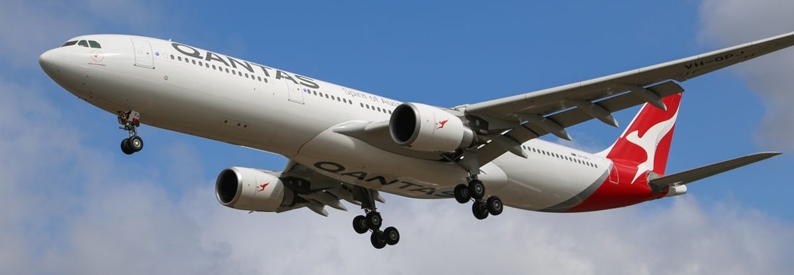
Operationally, Qantas Domestic will increase utilisation of its narrow-body B737-800 aircraft, allowing Airbus A330 aircraft in the domestic market to concentrate solely on East-West Australian services and peak services on the Sydney Kingsford Smith-Melbourne Airport-Brisbane International triangle. As a result, A330-200s will be freed up to enter the Qantas International fleet as replacement aircraft, helping to accelerate the retirement of older B747-400 aircraft.
All six of Qantas International’s non-reconfigured B747s will be retired ahead of schedule, by the second half of Financial Year 2016. Nine reconfigured B747s with A380-standard interiors will however remain.
All B767-300(ER)s will be retired by the third quarter of Financial Year 2015, resulting in cost and passenger benefits from fleet simplification.
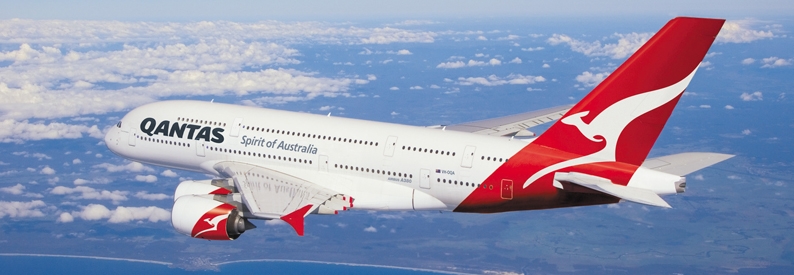
Qantas International’s eight remaining A380-800 orders will be deferred, with an ongoing review of delivery dates to meet potential future requirements. Schedule changes will allow maximum use of Qantas’ current twelve A380s.
The final three of fourteen Jetstar Airways (JQ, Melbourne Airport) B787-8s on firm order from Boeing (BOE, Washington National) will be deferred with its A320-200 Airbus (AIB, Toulouse Blagnac) order book also restructured.
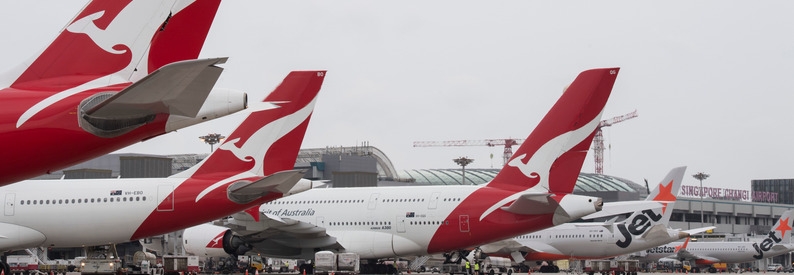
Over the next 12 months, Qantas will exit underperforming routes and make aircraft changes on certain routes to better match capacity to demand. Among the most prominent changes are: Qantas International will withdraw from the Perth International to Singapore Changi route in the first quarter of Financial Year 2015; Qantas’ Brisbane to Singapore and Sydney to Singapore services will be operated by A330s, replacing B747s in the first quarter of Financial Year 2015; Qantas services between Melbourne and London Heathrow will be re-timed in November 2014 to reduce A380 ground time at Heathrow (in the second quarter of Financial Year 2015). The Melbourne-London service change frees up an A380 for additional flying, and Qantas will evaluate opportunities to use the aircraft on other routes.
In terms of the airline's human resources, the Group will, over the next three years, reduce employee numbers by the equivalent of 5'000 full-time positions, through measures including: Reduction of management and non-operational roles by 1'500; Operational positions affected by fleet and network changes; a restructuring of line maintenance operations; the closure of the airline's Melbourne Avalon heavy MRO base, as previously announced; a restructuring of catering facilities including the closure of Adelaide catering, as previously announced.
The wage freeze for executives implemented in December 2013 will continue and will be extended to all Qantas Group employees.
"At the end of this transformation, Qantas will remain an employer of more than 27'000 people, the vast majority based in Australia – and we will be a better and more competitive company,” CEO Joyce ended.
- Type
- Base
- Aircraft
- Destinations
- Routes
- Daily Flights