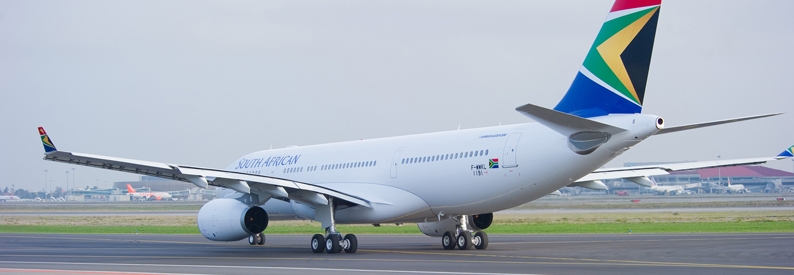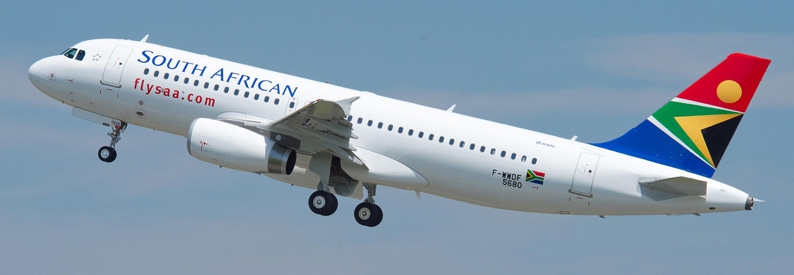
South African Airways (SA, Johannesburg O.R. Tambo) is in talks with the South African government as well as private financial institutions over the opening up of desperately needed lines of credit.
The state-owned carrier has not been profitable since 2011 and has, therefore, had to rely on over ZAR20 billion rand (USD1.6 billion) worth of state-backed guarantees for its survival.
Airline Chief Executive Vuyani Jarana told Parliament last week that SAA had debts of ZAR9.2 billion, as well as liabilities amounting to ZAR17.8 billion and, therefore, was unable to pay the principal debt and, as such, was only paying the interest. Given that its financial obligations exceeded its income, said to amount to ZAR30.7 billion, Jarana said SAA could only carry a certain amount of debt.
The airline's weak balance sheet has meant that it cannot attract investment or loans and, therefore, has to rely on bailouts. As such, a promised ZAR10 billion bailout was paid to the airline in December last year with ZAR7.6 billion having gone to lenders while ZAR2.4 billion had been used for working capital requirements.
According to Jarana, bearing in mind that SAA has no credit line, there is a cash ban and a gap between revenue and expenses.
To help sustain its financial obligations, SAA has been in discussions with Treasury as well as the banks on how they could have an open credit line.
"The long-range plan has been worked out with the break-even point being reached in 2021," he said. "The money is required immediately."
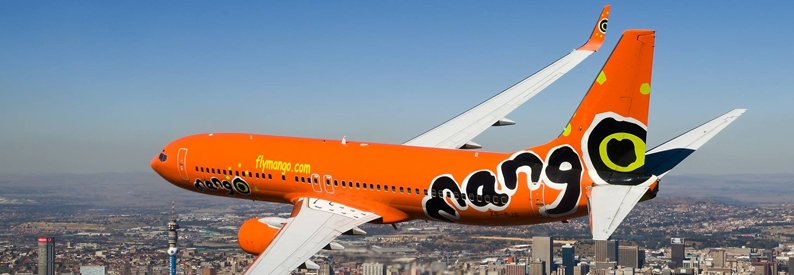
SAA has set about restructuring its operations culling multiple longhaul, regional and now domestic routes. Jarana said that SAA was making losses on all its domestic routes even though all the flights were full because the aircraft used were suited to longhaul and not for domestic routes. Only budget carrier Mango Airlines (MNO, Johannesburg O.R. Tambo) was profitable on all its routes, he said.
South Africa's Deputy Minister for Finance, Mondli Gungubele, added that SAA's long-term turnaround strategy would conclude in 2021 when it was expected to break even.
The first phase of the strategy, he said, involved financial intervention, operational model intervention and corporate governance intervention. To that end, bailouts will continue with ZAR4.8 billion to be disbursed for 2017/18. This would be in addition to the aforementioned ZAR10 billion paid out for 2016/17.
Gungubele added that it will cost approximately ZAR60 billion to privatise SAA.
“Our calculations, Chair, is that the implications are not less than ZAR60 billion compared to what we are raising now but we accept, Chair, that we have to take accountability to parliament in as far as this.”
- Type
- Base
- Aircraft
- Destinations
- Routes
- Daily Flights