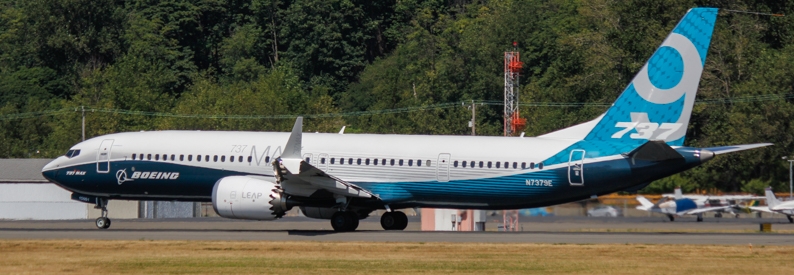
Boeing (BOE, Washington National) is in the early stages of developing a new single-aisle aircraft that could eventually replace its B737 MAX, The Wall Street Journal reported citing people familiar with the matter.
Chief executive Kelly Ortberg reportedly met with officials at Rolls-Royce Holdings in the United Kingdom earlier this year to discuss potential engine options for the plane. The company is also working on designs for the flight deck of the narrowbody.
A Boeing spokesperson told ch-aviation: "Our teams continue to be focused on our recovery plan, including delivering on our existing backlog of nearly 6,000 commercial airplanes and certifying the new B737-7, B737-10, and B777-9 models. At the same time, as we have done over the decades, our team evaluates the market, advances key technologies, and improves our financial performance, so that we will be ready when the time is right to move forward with a new product."
Rolls-Royce has declined to comment.
Jefferies analyst Sheila Kahyaoglu on September 30 reaffirmed a Buy rating on Boeing, citing its strategic focus and long-term growth potential. She pointed to Boeing’s plans for a next-generation single-aisle jet beyond 2035 and its financial strategy as key drivers for future performance.
The B737 MAX has faced significant challenges beginning with two fatal crashes: Lion Air Flight 610 in October 2018 and Ethiopian Airlines Flight 302 in March 2019, which together killed 346 people.
Investigations found that these accidents were primarily caused by the aircraft's Maneuvering Characteristics Augmentation System (MCAS), a flight control software that erroneously pushed the plane's nose downward due to faulty angle of attack sensor data. Boeing had initially downplayed the system's risks and did not adequately inform pilots or regulators about the MCAS.
The crashes led to a worldwide grounding of all B737 MAX aircraft from March 2019 to late 2020. Investigations revealed flawed engineering decisions, including reliance on a single sensor for MCAS input to avoid costly pilot retraining, inadequate regulatory oversight particularly by the Federal Aviation Administration, and production pressures that compromised thorough testing and safety validation.
Since the recertification, the aircraft has performed well in commercial operations, although it faced renewed scrutiny after a 2024 cabin door plug blow-out on an Alaska Airlines B737-9 led to a temporary partial grounding of MAX 9s.
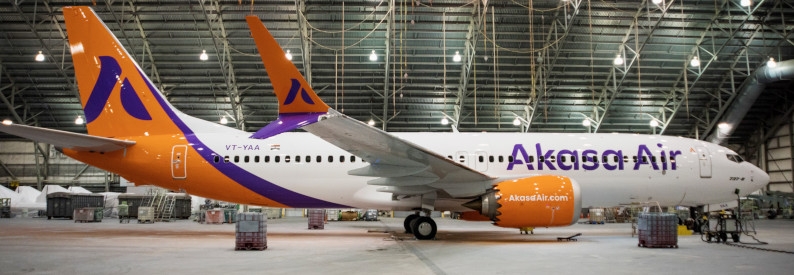
According to ch-aviation data, at least 69 airlines worldwide currently have B737-8s in service, the biggest operators being Southwest Airlines, United Airlines, Ryanair, Alaska Airlines, and American Airlines. Some 11 airlines globally operate the B737-9 model, most significantly United Airlines with more than 100 units of the model in service.