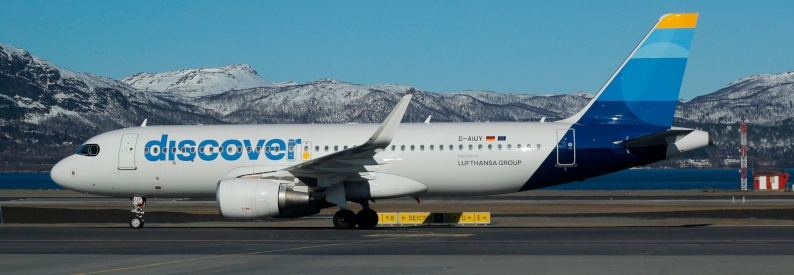
Lufthansa Group is nearing a key fleet decision for its leisure subsidiary Discover Airlines (4Y, Frankfurt International), with an announcement on new-generation widebody aircraft expected soon, CEO Carsten Spohr confirmed during a second-quarter results presentation.
Discover, which specialises in long-haul flights from Lufthansa's hubs at Frankfurt International and Munich to high-demand holiday destinations, currently operates a fleet of fourteen A330s (three A330-200s and eleven A330-300s), as well as sixteen A320-200 narrowbodies, according to ch-aviation data. Spohr said the group is now finalising plans to replace the A330-200s with next-generation widebodies as part of a broader fleet modernisation strategy.
"We are just about to take a decision on the new-generation widebodies which Discover will need to receive to replace the A330-200s for the longest flights," he told analysts in a conference call on July 31.
ch-aviation previously reported that Discover will phase out its three A330-200s in 2026 and replace them with six A330-300s by mid-2027, while also adding at least three A320s starting in 2025.
Spohr assured that Discover is profitable, although its numbers are consolidated - as are those of other subsidiaries - in the Lufthansa Group results. "They are growing both now from Frankfurt and Munich, and we expect them to operate up to 33 aircraft by 2027."
The leisure carrier is wet-leasing an A340-300 from Lufthansa for its Frankfurt-Philadelphia International route until August 17 due to delayed maintenance on its A330s in Jordan.
Spohr said that with Discover, Lufthansa has found a "widening" niche for leisure-focused long-haul travel out of Germany and expects that demand to increase further, particularly in light of stimulus from the German government that could spur more outbound tourism.
Group fleet modernisation, deliveries
Discover’s upcoming fleet renewal links to Lufthansa Group’s broader fleet modernisation plan to receive 63 new-generation aircraft by the end of 2026. The mainline already has ten A350-900s (out of 30 of the type) operating out of Munich with the new Allegris long-haul onboard product.
In addition, Spohr said, "we expect to welcome the first Boeing B787 with the Allegris cabin late this summer, operating out of Frankfurt, with up to nine [more of the type] to come by the end of the year". Lufthansa has thirty B787-9s on order, and Austrian Airlines nine more, with the carriers already operating five and two of the type, respectively. Austrian plans to induct its third B787-9 by the 2025-26 winter season.
Spohr added: "In between, we will also welcome the first Airbus A350 to Zurich with the new Swiss "Senses" product on board, hopefully in a couple of weeks." As previously reported, Swiss expects to receive its first of ten A350-900s in October 2025. Overall, according to Spohr, the group will see a new aircraft arriving "almost on a weekly basis" in 2026.
In terms of widebodies only, by the end of 2028, Lufthansa Group aims to operate forty-one B787-9s, sixteen B777-9s, forty-four A350-900s, and twelve A350-1000s, he said.
Asked about expected delivery delays from OEMs, Spohr noted that 2025 remained a "transition year again due to delayed aircraft". There is, he believed, "light at the end of the tunnel" for the industry in general, while Lufthansa Group itself has become much more resilient to these challenges. He warned that bottlenecks in OEM supply chains would likely persist until the end of the decade, but he expects noticeable improvement starting in 2026.
CFO Till Streichert added that the weaker US dollar had provided some relief on aircraft purchase costs. Lufthansa hedges about 50% of aircraft purchases at the point of transaction, he said.
Demand trends, regional pressures, cargo resilience
On the intercontinental front, Spohr highlighted particularly strong demand for Argentina, Japan, and South Korea. But he noted a mixed outlook for the North Atlantic; while premium class sales to/from the United States continue to perform well, economy demand - especially from Germany - is softening due to high travel costs, geopolitical uncertainty, and waning consumer sentiment. The group will moderate fourth-quarter US capacity growth but still expects a full-year increase of around 5%.
Spohr also confirmed that flights to Tel Aviv Ben Gurion resumed on August 1 after a long hiatus since the October 2023 Hamas attacks. He disclosed a "three-digit million" euro financial impact from suspended Middle East operations, which not only affected direct regional traffic but also onward flows to North America, particularly from countries like Iran.
On Lufthansa’s home market, Spohr warned that high German location costs - rising taxes, fees, and EU regulation - are eroding competitiveness. He flagged a lack of political support, despite broad awareness of the issue in Berlin. As a counter measure, the airline will implement more centralised management of its European short-haul network across all six hubs, mirroring its long-haul strategy to streamline operations and reduce complexity.
Meanwhile, Lufthansa Cargo (LH, Frankfurt International) reported a robust second quarter, with adjusted EBIT doubling year-on-year to EUR73 million euros (USD84 million). Growth was driven by strong e-commerce, semiconductor demand, and diverted sea freight. The cargo unit expanded freighter and bellyhold capacity, including the integration of ITA Airways’ cargo space on South American routes. The cargo segment remains well-positioned to navigate global volatility, Spohr said.
Lufthansa Group expects ITA Airways to post its first annual profit in 2025, with integration efforts continuing under a new five-year business plan focused on sustainable profitability.
Key financial highlights
Lufthansa Group reported a 27% year-on-year increase in adjusted EBIT to EUR871 million (USD1 billion) in the second quarter with higher operating margins (8.4%), modest revenue growth (up 3%), strong passenger airline and ancillary performance, record first half results at Lufthansa Technik, improved free cash flow, and a EUR289 million (USD333 million) reduction in net debt since the end of 2024.
- Type
- Base
- Aircraft
- Destinations
- Routes
- Daily Flights