
The United Kingdom's Natural Environment Research Council (NERC) has decided to end the funding for the Facility for Airborne Atmospheric Measurements (FAAM) programme. This will result in the National Centre for Atmospheric Science (NCAS) ending the programme by early April 2026, retiring the research lab's BAe 146-300 operated by Airtask (DCT, Exeter).
"Following review, NERC has concluded that the aircraft no longer offers value for money to the public because of a significant increase in costs and low planned utilisation," said the government council, which funds the programme. "The decision to withdraw funding will save nearly GBP32 million pounds [USD42.8 million] over the spending review period, and avoid a further GBP5 million [USD6.7 million] in costs."
G-LUXE (msn E3001), a 44.5-year-old aircraft, the first BAe 146 ever built by BAE Systems, has been parked at Cranfield since August 4, 2025.
The aircraft has always operated as a testbed and demonstrator aircraft, and was never in fully commercial service. It is owned by UK Research and Innovation and was recently operating exclusively on behalf of the agency. Its last third-party contract with the UK Met Office ended in 2024.
The NERC said it would pivot to "uncrewed aircraft and advanced sensors" to replace the BAe 146-300.
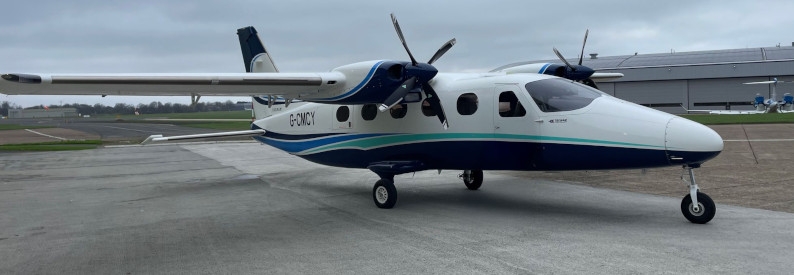
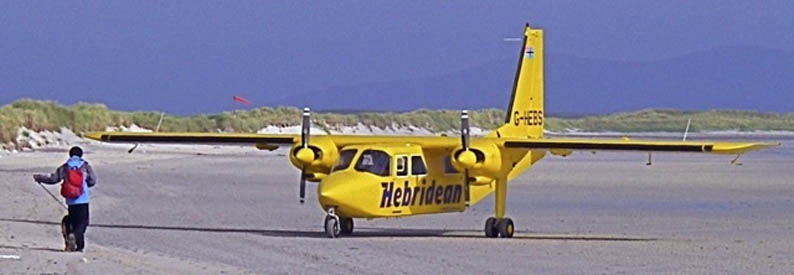
The BAe 146-300 is the only large aircraft operated by Airtask. The company also operates five BN-2s, four Reims Cessna F406s, and a single Tecnam P2012 on a mix of charter flights and scheduled services in Scotland under the Hebridean Air Services brand.
- Type
- Base
- Destinations
- Routes
- Daily Flights





Editorial Comment: The article has been amended to clarify that the decision to end the programme was taken by the NERC. - 09Mar2026 - 11:30 UTC