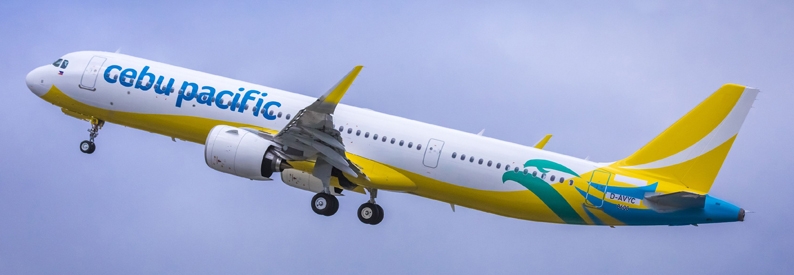
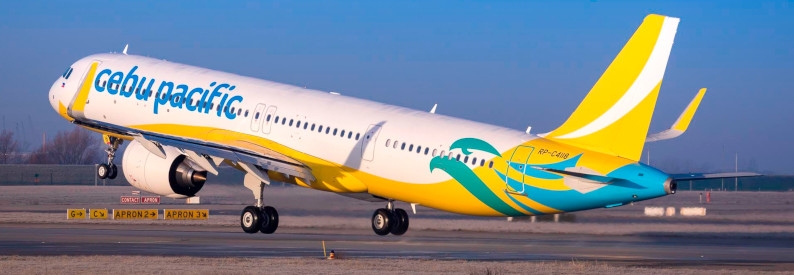
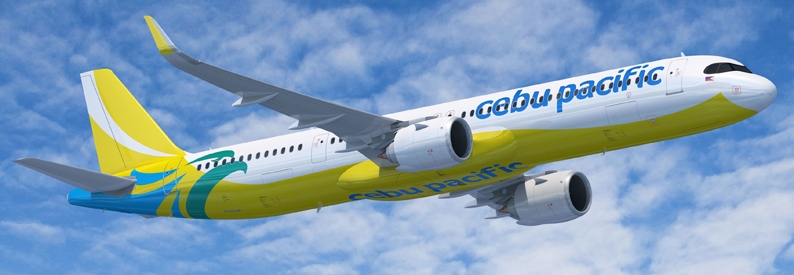
Cebu Pacific Air (5J, Manila Ninoy Aquino International) is moderating its growth outlook as Pratt & Whitney issues are expected to persist until 2028, chief executive Mike Szücs told Bloomberg in an interview. Sixteen Airbus A320neo family aircraft, a third of all of the carrier's fleet, are grounded and are awaiting engine replacements, he revealed.
"In all the years I've been doing this, none of us has encountered this situation where there is so much variability or uncertainty in your available fleet," Szücs said.
The Pratt & Whitney PW1000 engine issues have forced the airline to cut its targeted capacity growth from as high as 25% to a more realistic 13%-15%.
"Our strategic push for a more aggressive growth profile was the correct one. But certainly, the [long-term] AOG situation […] is higher than we anticipated." Nevertheless, he said that in the first half of 2025 Cebu Pacific Air grew its seat capacity by 21%.
"In the third quarter, we're certainly going to moderate the growth quite a lot because that's the weakest period of the year, and we want to be able to maintain our capability to fly the maximum amount of capacity when we get into the fourth quarter, which obviously has the Christmas peak," he added.
In August 2025, Cebu Pacific Air's network-wide seat capacity declined by 3.2% year-on-year. Domestic seat capacity plunged by 10.7%, although it was partially offset by a 21.4% increase in international capacity during the same period. The airline attributed this to "unscheduled engine removals, the flyadeal wet-lease, and scheduled maintenance events in preparation for the busy holiday months." However, in the first eight months of the year, the total seat capacity increased by 15.1%.
ch-aviation data shows that Cebu Pacific Air operates twenty-two A320-200Ns and nineteen A321-200NX, all of which are powered by Pratt & Whitney engines. Of those, eleven A320-200Ns and four A321-200NX are currently inactive.
Szücs further disclosed that he expected the Pratt & Whitney issues to stabilise by late 2027 or early 2028. Only then will Cebu Pacific Air be able to fully utilise the entirety of its fleet to pursue a more aggressive growth plan, he said.
On a more positive note, the CEO remarked that Cebu Pacific Air had improved at managing supply chain constraints than when the issues first emerged after the COVID-19 pandemic. The airline has been employing contingency plans, he said, like stationing more standby aircraft at its bases to limit disruptions.
The low-cost airline's 2026 outlook, Szücs added, will range between 5% and 15%, which he conceded is a wide window entirely dependent on its aircraft and spare engines' availability. In its first-half disclosure, the airline revealed that it received four PW1133G-JM engines free of charge from Pratt & Whitney as part of a compensation package.
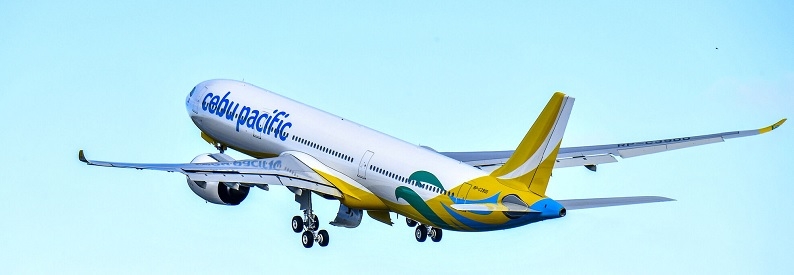
Cebu Pacific Air also operates seventeen A320-200s, seven A321-200s, and twelve A330-900Ns. The airline has commitments for six more A320-200Ns, seventy-four A321-200NX, ten A321-200NY(XLR)s, and four A330-900Ns, ch-aviation data shows.
- Type
- Base
- Aircraft
- Destinations
- Routes
- Daily Flights