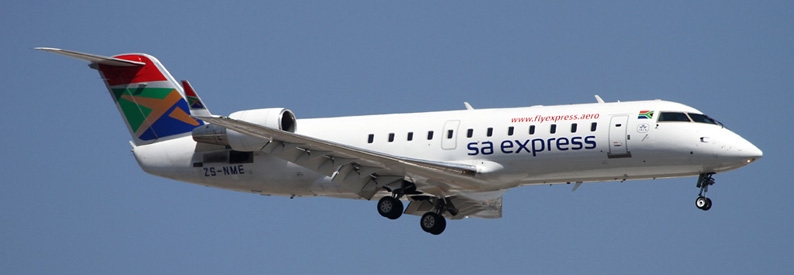
The liquidators of South African Express (Johannesburg O.R. Tambo) expect to wind up the failed state-owned carrier’s estate by April 2026, nearly six years after it entered provisional liquidation, pending the sale of its brand for ZAR150,000 rands (USD9,500) and the settlement of outstanding employee payments.
Briefing the South African parliament's Select Committee on Public Petitions and Executive Undertakings on February 24, joint liquidator Aviwe Ndyamara said the estate was "substantially wound up" and "approaching administrative finality".
"We have now finalised and almost concluded 90% of the administration. We lodged the first and final liquidation and distribution account with the Master of the High Court in 2025," he was quoted as saying by BusinessTech.
The South Gauteng High Court granted a final liquidation order in September 2022, more than two years after the airline was placed in provisional liquidation on April 28, 2020.
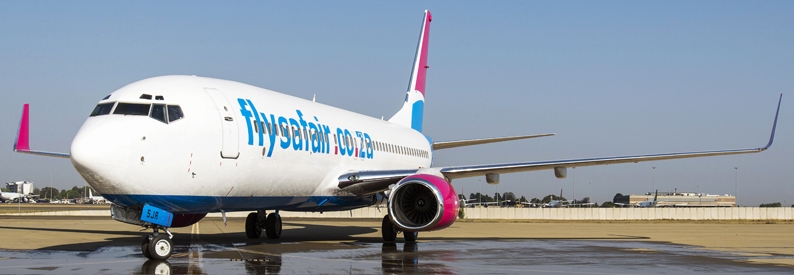
Three attempts to rescue South African Express failed. In 2020, Fly SAX, a vehicle created by former employees, abandoned its bid after its anchor investor, involving Harith General Partners, withdrew. Harith later pursued unsuccessful bids for Comair (South Africa) and South African Airways, to ultimately buy out Irish firm ASL Aviation Holdings for full ownership of FlySafair, a deal still pending regulatory approval.
A second process in March 2022 drew interest from three unnamed parties, but with most tangible assets already auctioned, no bidder was prepared to meet the ZAR10 million (USD630,000) reserve price. The final blow came in July 2022 when South Africa's Air Services Licensing Council (ASLC) cancelled the carrier’s operating licences, leaving it without tangible assets as liabilities approached ZAR1 billion (USD63 million).
Ndyamara said liquidators worked with the former Department of Public Enterprises (DPE) to preserve value for creditors. Movable assets were sold, debts recovered, and value-added tax refunds and investment interest collected, leaving about ZAR3.7 million (USD233,000) in free residue for distribution to secured, preferential, and concurrent creditors.
Of that amount, about ZAR2.99 million (USD188,000) was earmarked for preferential creditors, including employees.
When the airline entered provisional liquidation, the contracts of about 600 workers were terminated, with many left unpaid. In his presentation shared with ch-aviation, Ndyamara confirmed that 55 former employees are still owed dividends of ZAR4,520 (USD285) each, totalling ZAR248,615 (USD15,600). Payments have been delayed because liquidators have been unable to trace some individuals or verify their banking details. If they cannot be located, the funds will be transferred to the state’s Guardians Fund.
The other major outstanding issue is the sale of the airline’s brand and intellectual property, valued at about ZAR150,000. A sale process has been initiated but not finalised, Ndyamara said, and uncertainty remains over whether it will be concluded.
Lack of accountability
Following a separate briefing on February 24 by the South African Human Rights Commission, the parliamentary committee expressed concern that former directors of South African Express may not face any consequences for their role in the airline’s collapse.
In a statement issued afterwards, the committee said it was considering a petition from former employees calling on the National Council of Provinces (NCOP) to intervene in what they described as the government’s failure to challenge the airline’s liquidation. The petitioners said workers were not paid salaries, overtime, leave pay, or retrenchment benefits following business rescue and eventual liquidation.
Committee chairman Ofentse Mokae said the process raised serious concerns about accountability and worker protection, adding that the state appeared to have distanced itself from responsibility through various departments, including those for transport, treasury, and public enterprises.
The committee also drew attention to gaps in legislation that leave workers vulnerable when state-owned entities go into liquidation. "South African Express was an entity of the state, and this situation is deeply concerning. While relevant departments were involved, their lack of urgency in resolving the challenges faced by affected workers leaves much to be desired," Mokae said.
The committee said it would deliberate and finalise its report on the petition before submitting it to the NCOP for consideration and adoption.
Evidence of corruption and bad management at South African Express was revealed in a report of South Africa's Judicial Commission of Inquiry into State Capture in 2022. Key directors and executives were subpoenaed but applied to the South African High Court to stay out of the insolvency inquiry.