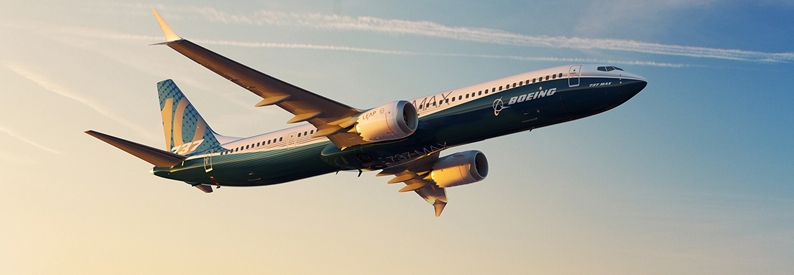
Boeing will continue to avoid criminal prosecution over two fatal B737 MAX crashes as long as it complies with a 2025 non-prosecution agreement, after a US appeals court rejected challenges from victims’ families.
In a unanimous ruling on March 31, a three-judge panel of the US Court of Appeals for the Fifth Circuit denied petitions by relatives of the crash victims to overturn the NPA, finding that the US Department of Justice did not violate victims’ rights laws when it struck the deal with Boeing in 2025 and moved to dismiss the case.
The decision upholds a prior ruling by the US District Court for the Northern District of Texas and leaves in place the NPA requiring Boeing to pay about USD1.1 billion and implement reforms in exchange for avoiding prosecution.
The deal with Boeing
The case (docket number 25-11253) stems from the 2018 and 2019 crashes of Lion Air and Ethiopian Airlines B737-8s, in which 346 people died. The crashes were found to have been caused by pilots’ unfamiliarity with changes to the B737 MAX’s Manoeuvring Characteristics Augmentation System (MCAS) flight control system.
Following a two-year investigation, the DOJ in January 2021 charged Boeing with conspiracy to defraud the United States, alleging that two employees had intentionally misled the Federal Aviation Administration regarding changes to the MCAS. On the same day, the department entered into a deferred-prosecution agreement (DPA) with Boeing. Under its terms, the company admitted wrongdoing but avoided prosecution if it met certain conditions. The Texas district court approved the deal.
In December 2021, the victims’ families sought to set aside the DPA under the Crime Victims’ Rights Act (CVRA), but the district court denied the challenge in February 2023. While it found that the DOJ violated victims’ rights by not consulting the relatives earlier, it concluded that the violation was due to a legal error, not bad faith, and declined to undo the DPA.
The families' appeals
The families first petitioned the Fifth Circuit in 2023, but the appeal court rejected the effort as premature.
In May 2024, the DOJ determined that Boeing had failed to meet compliance obligations under the DPA, releasing the department from its terms.
The following year, the DOJ and Boeing negotiated a Non-Prosecution Agreement (NPA), whereby the manufacturer agreed to pay about USD1.1 billion and implement reforms. The DOJ then moved to dismiss the criminal charge.
Victims’ families opposed the move, arguing they were not properly consulted and that the agreement was against the public interest.
However, in November 2025, the district court granted the government’s request to dismiss the case.
In a second appeal, the families filed new petitions with the Fifth Circuit, challenging both the old DPA and the new NPA.
The latest ruling
On March 31, the Fifth Circuit appeals court denied all petitions. It found that the relatives' challenges of the 2021 DPA were moot because Boeing had already breached it.
On the 2025 NPA, the court found that prosecutors had met their obligation to confer with the victims' families by holding a meeting and considering their views. The judges also found no evidence that the government had misled families about the timing or effect of the deal, or its ability to refile charges if Boeing violated it.
The court added it lacked authority under the victims’ rights law to review the DOJ's decision to dismiss the prosecution, effectively leaving the deal with Boeing in place.