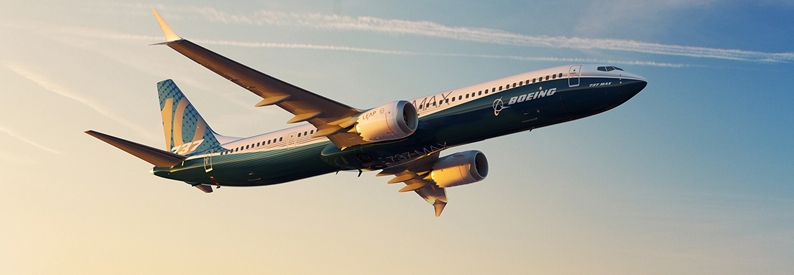
A US federal judge has partially certified a class-action lawsuit against Boeing by shareholders over alleged misleading statements about the safety of the B737 MAX following two fatal crashes that killed 346 people in 2018 and 2019. The ruling advances claims by pension funds and investors who say the company's executives artificially inflated stock prices.
In a ruling on March 18, Judge Franklin U Valderrama of the Illinois Northern District Court in Chicago said anyone who acquired Boeing common stock or call options, or sold options, between November 7, 2018, and October 18, 2019, and suffered losses, can proceed as a class. The decision came in case 19-cv-02394, "In re: Boeing Company Aircraft Securities Litigation".
The judge approved an event-study damages model presented by the investors using an out-of-pocket losses methodology to measure stock price inflation from the alleged misrepresentations.
The plaintiffs accuse Boeing, its former president and CEO Dennis Muilenburg, and ex-CFO Gregory Smith of securities fraud under Section 10 (b) of the US Securities Exchange Act. They allege the defendants made false and misleading comments with the intent to deceive investors in the wake of the two crashes, which artificially inflated Boeing's stock price and caused losses to shareholders. All claims against Smith were dismissed in September 2024.
In particular, the plaintiffs allege that flaws in the MAX's Manoeuvring Characteristics Augmentation System (MCAS) software were downplayed after the Lion Air crash in October 2018 that killed 189 people, and the Ethiopian Airlines crash in March 2019, which killed 157.
The plaintiffs allege that Boeing had touted the B737 MAX as safe despite internal knowledge of MCAS risks, including erroneous activations that pilots could not override. Statements like "the 737 MAX is as safe as any airplane that has ever flown the skies" allegedly propped up shares until revelations triggered a drop.
Plaintiffs allege Boeing sought to fast-track MAX certification by amending an existing FAA type certificate, misleading regulators with flawed safety assumptions about the MCAS system, including overstating pilots’ ability to respond quickly and understating when the system could activate. They further claim that chief technical pilot Mark Forkner helped minimise training requirements and remove references to MCAS from manuals, later boasting he had "jedi-mind trick[ed]" the FAA, leaving pilots unaware of the system before the first crash.
The judge noted that a New York Times article on October 18, 2019, disclosed Forkner’s text messages, including one describing MCAS as "running rampant". Boeing’s stock price fell 6.8%, or by about $25 a share, that day.
The court shortened the proposed class period, rejecting December 2019 as the end date after finding media reports by November 11 already revealed delays in the B737 MAX's recertification, dissipating any fraud effects, and because no big stock drops were recorded tied to statements that November and December.
Boeing has faced penalties, including a USD200 million US Stock Exchange Commission fine and a USD2.5 billion Department of Justice settlement over B737 MAX issues.
The case heads to trial on the remaining claims.