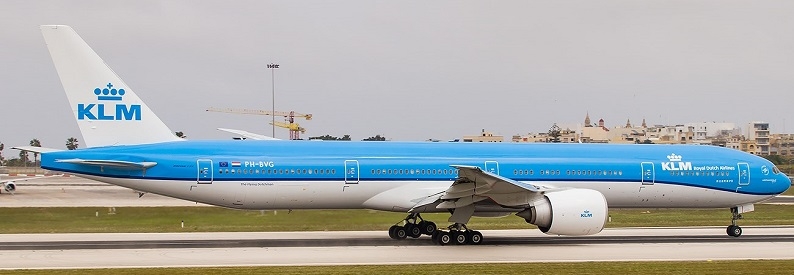
KLM Royal Dutch Airlines (KL, Amsterdam Schiphol) will reduce its workforce by another 15%, affecting about 5,000 positions, as part of a sweeping restructuring aimed at improving annual earnings by EUR1 billion euros (USD1.12 billion) and restoring competitiveness, president and CEO Marjan Rintel announced on November 5, 2026.
In a statement, Rintel blamed the far-reaching measures on global instability, high fuel prices, and mounting pressure on the aviation industry. She said the job reductions will be achieved through outsourcing, transfers within Air France-KLM, natural attrition, and productivity improvements, with the airline seeking to avoid compulsory redundancies.
Of about 5,000 positions affected, 1,250 at KLM Catering Services have already been transferred to activities operated in partnership with gategroup, the catering company's 75% shareholder. A further 800 positions in Ground Services will be transferred to external providers, while 2,000 positions, including 1,500 at customer contact centre Cygnific, will move to Air France-KLM.
The remaining reduction of about 1,000 positions will result from "structural productivity improvements".
KLM aims to increase productivity by at least 8% by 2028, alongside more moderate wage growth and changes to employment conditions. It will seek new collective labour agreements with unions.
Network, fleet, outsourcing
KLM will also restructure its European network to restore profitability, adjusting capacity to demand and prioritising routes that contribute most to passenger connectivity through Schiphol, Rintel said.
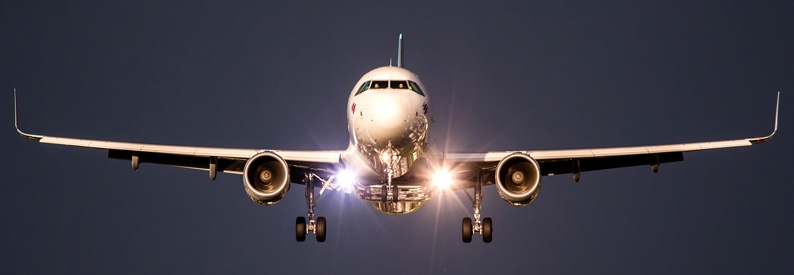
"KLM is changing the balance between larger and smaller aircraft in its European fleet. The A321-200N will remain part of the fleet, while smaller E195-E2 will replace the planned A320s. By operating more smaller aircraft, KLM can better match capacity to the demand across its European network. This will give KLM Cityhopper a greater role," she explained.
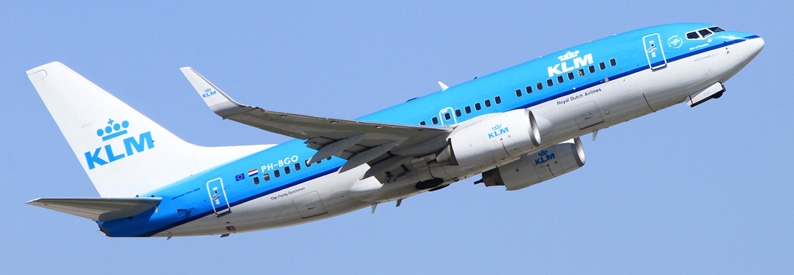
According to Rintel, KLM will phase out its B737s and E190s over the coming years, saying that simplifying the fleet will streamline the organisation and help KLM better manage costs and operations.
The restructuring will extend across several divisions, with KLM outsourcing or consolidating activities that external specialists or other Air France-KLM entities can perform more efficiently.
Ground Services will reorganise passenger handling, baggage services, and apron operations, with external partners taking over certain below-the-wing activities at KLM Cityhopper and baggage handling at Amsterdam Schiphol's East Hall.
KLM Cargo will consolidate handling in its own Schiphol warehouse and increase automation to accommodate higher volumes without additional employees. Engineering & Maintenance will concentrate resources on the future fleet and align its engine services and component services management more closely with Air France-KLM.
The proposed expansion of Air France-KLM to include SAS Scandinavian Airlines, currently under review by the European Commission, is also expected to create further opportunities for synergies and economies of scale.
Improvement targets
Rintel said KLM had already achieved more than EUR750 million (USD843 million) in structural financial improvements in recent years but needed to go further. The additional EUR1 billion annual earnings improvement would bring its total targeted improvements to EUR1.4 billion (USD1.6 billion), supporting investment in fleet renewal, customer experience, and employees.
The airline will continue focusing on its 160-destination nonstop network from Schiphol, customer relationships, and operational reliability, while investing in onboard services, high-speed Wi-Fi on intercontinental flights, and digitalisation.
Rintel warned that further changes to the organisation, employment conditions, productivity, and staffing could still be necessary as KLM monitors progress.
- Type
- Base
- Aircraft
- Destinations
- Routes
- Daily Flights