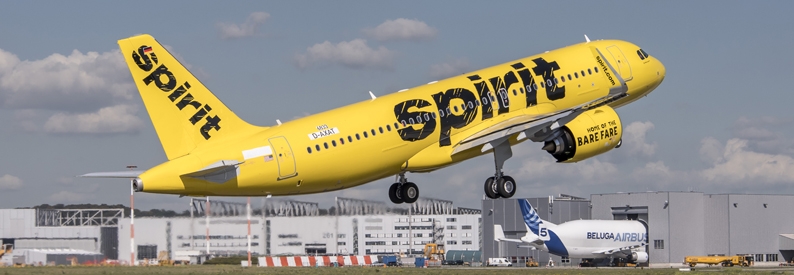
US's Spirit Airlines suspends operations
02May2026
News for you
View AllStay Updated with ch-aviation Newsletter
From fleet changes to market trends, our newsletter keeps you up to date with what matters in global aviation. Subscribe now and get the latest news on commercial and business aviation delivered straight to your inbox.
Subscribe hereWhat we offer

Operator News
With over 100,000 archived articles covering Commercial Aviation Operators worldwide, we offer you an eagle’s eye view of any operator’s state of affairs at the click of a button.
Learn more
Operator Data
Search and get detailed profiles for over 14,000 airlines and aircraft operators.
Learn more
Operator Contact Data
Get detailed access to more than 12,000 operator contacts for almost any active commercial operator or Start-Up on the planet.
Learn more
Operator Schedule Data
Get access to the routes and schedules of almost all scheduled airlines.
Learn more
Operator Capacity Data
Search for and display detailed capacity, frequency, and market share information for airlines and airports worldwide.
Learn more
Operator IT Data
Search for and display details on Passenger Services System providers for all scheduled airlines as well as each Passenger Services System (PSS) provider's customer list.
Learn more
Aircraft Data
Search our extensive fleet list and fleet database with over 81,000 commercial aircraft currently being tracked.
Learn more
Aircraft Order Data
Track every aircraft orders placed with Airbus, Airbus Canada, ATR, Boeing, Cessna Aircraft Company (SkyCourier), COMAC, De Havilland Aircraft of Canada, Embraer, Ilyushin Design Bureau, Yakovlev, Viking Air and Tupolev Design Bureau
Learn more
Charter Aircraft Data
Find charter aircraft available on a global scale and get in touch with its operator to inquire about availability.
Learn more
Aircraft Utilisation Data
Track utilisation data down to tail number level with flight hours and cycles, average stage length, daily/annual utilisation and search aircraft by forecasted hours/cycles/thresholds.
Learn more
Aircraft Ownership Data
Our aircraft ownership data gives you insight into who owns or manages a specific aircraft, the aircraft valuation estimate, aircraft lease-end dates, full lessor portfolios, and aircraft financed through an SPV (Special Purpose Vehicle).
Learn more
Aircraft History Data
Search for full historical commercial aviation operator data down to aircraft level and learn how it changed operators over its lifetime.
Learn more
Aircraft Accidents and Incidents Data
Get a full overview of all accidents and incidents by operator and/or aircraft variant.
Learn more
Airport Data
Access to 14,000+ airport profiles worldwide, commercially served or otherwise relevant.
Learn more
Airframe MRO Providers and Customers Data
Search for and get details on more than 750 MRO Providers, which customers they serve, where their facilities are located and the type of airframe maintenance they provide (base, line + A checks, paint, etc.)
Learn more
Airframe MRO Events Data
Search for and get details on more than 25,000 commercial aviation airframe MRO events based on a combination of Spire satellite/terrestrial ADS-B data and ch-aviation's database of airframe MRO providers and their customer contracts.
Learn more
Operator News
Our Business Aviation Operator News bring you the latest information on business/private charter operators focusing on key topics such as business models, aircraft management, etc.
Learn more
Operator & Airport Data
Search for and get detailed profiles for over 44,000 business jet operators and access to 14,000+ airport profiles.
Learn more
Operator Contact Data
Get detailed access to more than 5,000 operator contacts for almost any active business jet operator or Start-Up on the planet.
Learn more
Aircraft Data
Search our extensive fleet list and fleet database with over 29,000 business jet aircraft currently being tracked.
Learn more
Aircraft Order Data
Track every publicly announced aircraft order placed with Airbus, Boeing, Bombardier, Cessna Aircraft Company, Cirrus, Dassault Falcon, Embraer, Gulfstream, HondaJet, and Pilatus.
Learn more
Aircraft Ownership Data
Our aircraft ownership data gives you insight into aircraft owners, managers, SPVs and registered trusts.
Learn more
Aircraft History Data
Search for full historical business jet operator data down to aircraft level and learn how it changed operators over its lifetime.
Learn more
Aircraft Accidents and Incidents Data
Get a full overview of all accidents and incidents by operator and/or aircraft variant.
Learn moreLatest news
The United States Federal Aviation Administration (FAA) is planning to require owners and operators to inspect General Electric CF34 engines. The proposal applies to an estimated 1,152 engines installed on Challenger 600 and CRJ200 family aircraft and was prompted by a dual-engine power loss event in 2024....
The United States Federal Aviation Administration (FAA) is planning to require owners and operators to inspect General Electric CF34 engines. The proposal applies to an estimated 1,152 engines installed on Challenger 600 and CRJ200 family aircraft and was prompted by a dual-engine power loss event in 2024.
Although not detailed by the FAA, the event has been linked to the crash of a Challenger 604 operated by Hop-A-Jet Worldwide Jet Charter earlier that year.
Through a notice of proposed rulemaking (NPRM) released on April 30, the FAA proposes a new airworthiness directive (AD) covering CF34-1A, CF34-3A, CF34-3A1, CF34-3A2, and CF34-3B engines. These power Challenger 600-series aircraft across all variants, along with a smaller number of CRJ200-family jets.
“This proposed AD was prompted by a dual-engine power loss event and a subsequent manufacturer investigation, which revealed corrosion in the high-pressure compressor (HPC) case affecting the variable geometry (VG) system,” the NPRM states.
The AD would require several tests, including borescope inspections for corrosion and, depending on the results, VG system functional checks for pressure evaluation. Corrective actions could include engine retirement. The directive would also require incorporation of the VG system check into the engine maintenance manual's airworthiness limitations.
Depending on engine type and serial number, owners and operators could be required to complete inspections before further flight, within one year, or within two years. In addition, some engines would be subject to restart tests every three months.
The FAA will accept comments on the proposed AD until June 15, 2026.
Although the FAA does not detail the triggering event in the NPRM, a 2005-built Challenger 604 equipped with CF34-3B engines and operated by Hop-A-Jet crashed near Naples Municipal on February 9, 2024, following a dual-engine failure. The accident killed two company pilots.
The crash prompted Hop-A-Jet and affiliated companies to file a lawsuit on September 26, 2025, against General Electric, Bombardier Aerospace, Learjet, and other aviation service providers. The Part 135 operator alleges negligence and concealment, claiming General Electric had been aware since 2019 that a key VG system in the CF34 engine family was prone to hidden corrosion.
On April 23, 2026, the National Transportation Safety Board (NTSB) released the final report on the crash. “Corrosion of both engines' VG system components led to operation in an off-schedule position and resulted in near-simultaneous sub-idle rotating compressor stalls on approach, subsequent loss of thrust in both engines, and an off-airport landing,” the report states.
“Contributing to the accident was inadequate fault-isolation guidance by the engine manufacturer, which prevented identification of corrosion buildup in VG system components during troubleshooting of hung-start events in both engines about one month before the accident,” the report adds.
Speaking to AIN before the FAA's proposed rulemaking was released, Hop-A-Jet president Barry Ellis said he was surprised no recommendations were issued by NTSB. While welcoming General Electric's revised service bulletins and maintenance manual updates addressing corrosion-detection procedures, issued on October 30, 2025, he called for further action.
“We believe that, in the interest of safety, there needs to be an FAA mandate to adhere to these service bulletin procedures, and to go further,” Ellis said, adding that this could take the form of an AD requiring more frequent borescope inspections and VG system pressure tests.
ch-aviation contacted General Electric, Bombardier, and Hop-A-Jet for comment.
04May2026
This article is only available with a subscription for Commercial Aviation News, Operator & Airport Data.
04May2026
This article is only available with a subscription for Commercial Aviation News, Operator & Airport Data.
04May2026
The United States Federal Aviation Administration (FAA) is planning to require owners and operators to inspect General Electric CF34 engines. The proposal applies to an estimated 1,152 engines installed on Challenger 600 and CRJ200 family aircraft and was prompted by a dual-engine power loss event in 2024....
The United States Federal Aviation Administration (FAA) is planning to require owners and operators to inspect General Electric CF34 engines. The proposal applies to an estimated 1,152 engines installed on Challenger 600 and CRJ200 family aircraft and was prompted by a dual-engine power loss event in 2024.
Although not detailed by the FAA, the event has been linked to the crash of a Challenger 604 operated by Hop-A-Jet Worldwide Jet Charter earlier that year.
Through a notice of proposed rulemaking (NPRM) released on April 30, the FAA proposes a new airworthiness directive (AD) covering CF34-1A, CF34-3A, CF34-3A1, CF34-3A2, and CF34-3B engines. These power Challenger 600-series aircraft across all variants, along with a smaller number of CRJ200-family jets.
“This proposed AD was prompted by a dual-engine power loss event and a subsequent manufacturer investigation, which revealed corrosion in the high-pressure compressor (HPC) case affecting the variable geometry (VG) system,” the NPRM states.
The AD would require several tests, including borescope inspections for corrosion and, depending on the results, VG system functional checks for pressure evaluation. Corrective actions could include engine retirement. The directive would also require incorporation of the VG system check into the engine maintenance manual's airworthiness limitations.
Depending on engine type and serial number, owners and operators could be required to complete inspections before further flight, within one year, or within two years. In addition, some engines would be subject to restart tests every three months.
The FAA will accept comments on the proposed AD until June 15, 2026.
Although the FAA does not detail the triggering event in the NPRM, a 2005-built Challenger 604 equipped with CF34-3B engines and operated by Hop-A-Jet crashed near Naples Municipal on February 9, 2024, following a dual-engine failure. The accident killed two company pilots.
The crash prompted Hop-A-Jet and affiliated companies to file a lawsuit on September 26, 2025, against General Electric, Bombardier Aerospace, Learjet, and other aviation service providers. The Part 135 operator alleges negligence and concealment, claiming General Electric had been aware since 2019 that a key VG system in the CF34 engine family was prone to hidden corrosion.
On April 23, 2026, the National Transportation Safety Board (NTSB) released the final report on the crash. “Corrosion of both engines' VG system components led to operation in an off-schedule position and resulted in near-simultaneous sub-idle rotating compressor stalls on approach, subsequent loss of thrust in both engines, and an off-airport landing,” the report states.
“Contributing to the accident was inadequate fault-isolation guidance by the engine manufacturer, which prevented identification of corrosion buildup in VG system components during troubleshooting of hung-start events in both engines about one month before the accident,” the report adds.
Speaking to AIN before the FAA's proposed rulemaking was released, Hop-A-Jet president Barry Ellis said he was surprised no recommendations were issued by NTSB. While welcoming General Electric's revised service bulletins and maintenance manual updates addressing corrosion-detection procedures, issued on October 30, 2025, he called for further action.
“We believe that, in the interest of safety, there needs to be an FAA mandate to adhere to these service bulletin procedures, and to go further,” Ellis said, adding that this could take the form of an AD requiring more frequent borescope inspections and VG system pressure tests.
ch-aviation contacted General Electric, Bombardier, and Hop-A-Jet for comment.
04May2026
This article is only available with a subscription for Business Jet News.
04May2026
This article is only available with a subscription for Business Jet News.
04May2026
Join us for a quick tour around ch-aviation with an introduction to our Commercial & Business Aviation news & data and best practices for a flying start.
You need raw airline industry data to integrate into your own applications (CRM, ERP, SAP, Lease Management Software, Salesforce etc), analytical models or production tools? Our Data Feeds are what you need.
We provide one of the largest and most thoroughly researched aviation industry databases, including data for:
100,000+
News Articles Published
45,000+
Commercial and Business Aviation Operators
110,000+
Commercial and Business Aviation Aircraft
14,000
Airport Profiles
110,000+
Schedule Entries
17,000
Commercial and Business Operator Contacts
Proud to serve








14-day free trial
Try us out before you buy
Get full, unrestricted access to all of ch-aviation's news and data for 14 days.
Our no-commitment guarantee:
Upgrade to our Data and News Subscriptions
Aviation Intelligence for your everyday use
Our Data and News subscriptions grant you access to our extensive databases for Commercial and Business Aviation. You can read our Exclusive News Stories, look up Aircraft Operators, analyse global aircraft fleets, browse hundreds of thousands of Airline Schedules, or find email addresses of Senior Managers to contact. We've got you covered on more than 51,000 Operators, 110,000 Aircraft, and 14,000 Airports. Need Intelligence to make informed decisions? These subscriptions are for you.
What you need to know:
Want to know more?
Contact us"In any case, I would like to take this opportunity to thank you for your great work and many ideas that you have recently come up with. For me and my team, ch-aviation has become an integral part of our daily work, especially at this time. Keep it up!"
Markus Alexander Reichert Head of Traffic Strategy and Market Analysis

“Thank you very much. You have a superb database.”
Steven F. Udvar-Házy CEO Air Lease Corporation & Founder of ILFC

“ch-aviation pro is still proving a very useful tool that all the team have had positive feedback on.”
Clive Chalmers Trading Director

“Thank you very much for constant improvement of your product it’s really one of the most convenient to use for our every day work"
Linas Dovydenas CCO and Member of the Board of Directors