Hop-A-Jet Worldwide Jet Charter (HPJ, Fort Lauderdale Executive) and affiliated companies have filed a US class-action lawsuit accusing General Electric, Bombardier Aerospace, Learjet, and other aviation service providers of negligence and concealment related to a fatal 2024 accident near Naples Municipal in Florida, which killed two of the airline's pilots.
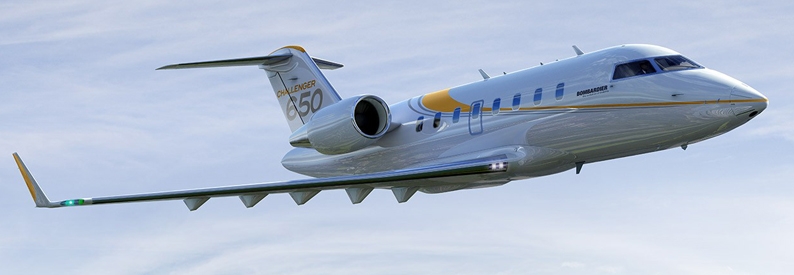
According to the details of the claim filed at the US District Court for the Southern District of Florida, Challenger 604 N823KD (msn 5584) operated by Hop-A-Jet suffered a dual engine failure on February 9, 2024, allegedly due to corrosion in its General Electric CF34-3B engines. The experienced pilots, Edward Daniel Murphy and Ian Frederick Hofmann, attempted an emergency landing on the Interstate 75 highway on approach to the airport but were killed, while two passengers, a cabin crew member, and bystanders survived.
The lawsuit was filed on September 26, 2025, by Hop-A-Jet, its wholly-owned subsidiary and Part 135 operator ACE Aviation Service, and aircraft owner East Shore Aviation against General Electric Company, GE Aerospace, Bombardier Inc., Bombardier Aerospace Corp., Learjet Inc., Turbine Engine Specialist Inc., and Nebraska-based maintenance provider Duncan Aviation Inc.
The plaintiffs claim that General Electric was aware since at least 2019 that a key variable guide vane (VGV) system in the CF34 engine family is prone to hidden corrosion, causing compressor stalls and engine failures. They accuse General Electric of covering up the engine failure risks and limiting corrosion coverage in its service contracts instead of warning the plaintiffs or improving maintenance procedures.
"The cause of the catastrophe was a 'non-recoverable dual rotating compressor stall' arising from corrosion to the variable guide vane (VGV) systems of the CF34-3B engines powering the aircraft. GE designed and manufactured its CF34 family of engines without external lubrication access and with restricted inspection capability that increased the risk of VGV corrosion and allowed VGV corrosion to go undetected and, if detected, to be unreported," the claim reads.
The suit also targets Bombardier Aerospace and the maintenance firms, alleging they missed or failed to report signs of corrosion despite inspections, leading to certification of the jet as airworthy when it was not.
The plaintiffs accuse the defendants of prioritising profits over safety.
On October 6, the court granted the defendants an unopposed motion for extension of time to respond to the class action complaint, allowing General Electric to respond by November 24, 2025, while GE Aerospace is due to respond by October 14, 2025, and Duncan Aviation on October 8, 2025.
The US National Transportation Safety Board (NTSB) has made the docket of the accident publicly available but has yet to finalise its report.
In reaction, a GE Aerospace spokesperson said: "We are deeply saddened by the accident and extend our heartfelt sympathies to the families and loved ones of those involved. Safety is our first priority, and our technical teams are supporting our customer and the National Transportation Safety Board’s ongoing investigation."
Bombardier, in a statement shared with ch-aviation, said: "Bombardier remains deeply saddened by this tragic event and our thoughts remain with those affected by this accident. We continue to fully support the authorities with their investigation and to cooperate as needed. We will refrain from comment on ongoing litigation."
- Type
- Base
- Aircraft