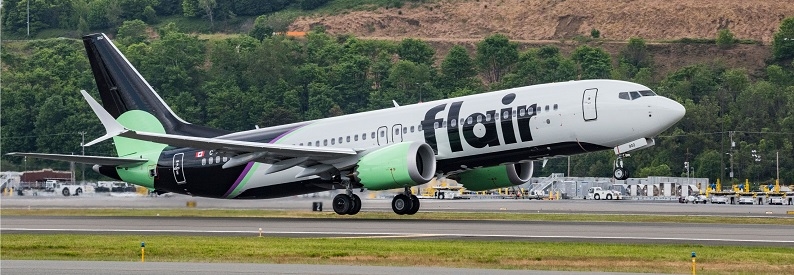
Flair Airlines (F8, Kelowna) no longer sees itself as an ultra-low-cost carrier as it adapts a traditional business model to the unique characteristics of the Canadian market, chief executive Maciej Wilk has told the travel news site TravelPulse Canada in an interview.
In addition, the ‘value carrier,’ as Wilk defines Flair, is looking to increase its fleet by four or five aircraft. However, OEM delays and a tight secondary market are making growth slower than the company would like.
“The global aeroplane market is very difficult, with manufacturing delays at Boeing and engine problems with the Airbus A320neo, so only a handful of aircraft are coming back to the secondary market. If I could today, I would probably ask for four or five aircraft immediately because the company is essentially ready to operate at a much larger scale,” he said.
In an interview with ch-aviation last year, the carrier’s chief commercial officer, Eric Tanner, said Flair was looking to balance between two aircraft types, the B737-8 and the B737-800, as a lower-cost aircraft platform would allow it to take advantage of the highly seasonal market in Canada.
ch-aviation fleets data shows Flair operates eighteen B737-8s and two B737-800s.
Wilk said that the company had undertaken a three-year transformation to improve reliability and offer “premium product” that “vastly matches the airport and flight experience offered by other carriers.”
“We are no longer an ULCC. We are a value carrier. Canada is a very specific market, we had to consciously deviate from the ULCC guidebook,” he said, naming initiatives such as crews overnighting and staying outside their bases to be able to operate routes such as Vancouver International-Toronto Pearson, and capitalising on winter demand on foreign leisure destinations such as Cancún.
In recent years, Canada has lost its fair share of ULCCs, with Lynx Air and Canada Jetlines suspending operations in 2025.