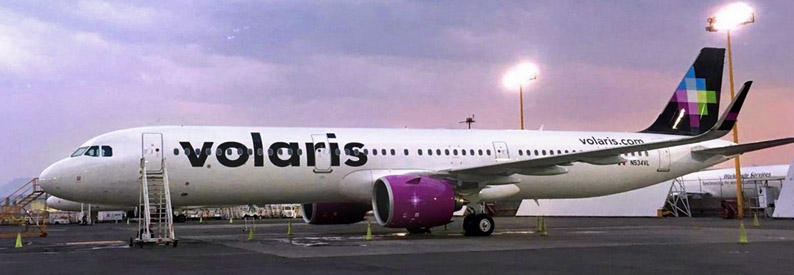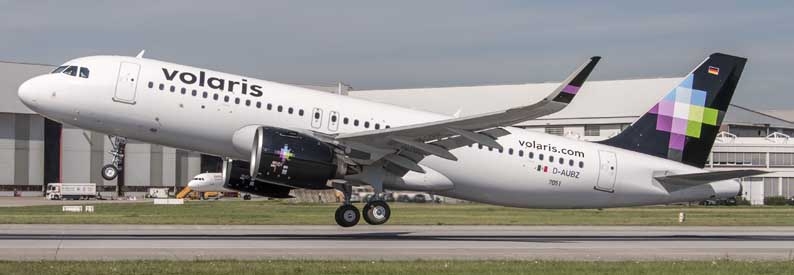
The business consolidation between Volaris and Viva (Mexico) under a single holding company, to be called Grupo Mexicano de Aerolíneas, will test Mexico’s newly created antimonopoly commission and could potentially affect the already strained bilateral relationship between Mexico and the United States, according to insiders interviewed by ch-aviation.
“The devil is in the details, and both the industry and passengers should be paying close attention to what the antimonopoly commission authorises and what remedies it imposes,” said a C-level airline executive, speaking on condition of anonymity.
While airline consolidation is a global trend, and Latin America has seen several combinations in recent years (most notably Abra Group in 2024, which now controls avianca airlines, GOL Linhas Aéreas Inteligentes, Wamos Air, and NG Servicios Aéreos, and aims to add SKY Airline (Chile)), the Volaris-Viva tie-up stands apart. The key difference is that it would place Mexico’s two largest carriers under the same corporate umbrella, giving the combined group close to 70% of the domestic market.
According to Mexico’s civil aviation data, up to November 2025 Viva and Volaris had carried 42.5 million of the country’s 57.8 million domestic passengers, accounting for 73.4% of the market. At México City International, the two airlines jointly represent 31.57% of weekly capacity, still below Aeroméxico’s 49.3%, according to ch-aviation schedules data.
Contacted by ch-aviation, Mexico’s antimonopoly authority said it had not yet begun reviewing the transaction and declined to provide a timeline. The Comisión Nacional Antimonopolio (CNA) was established in October 2025, replacing the long-standing COFECE following the enactment of a new competition law last year.
According to Fabricio Cojuc, a senior airline and airport consultant, the main competition concern is likely to centre on Mexico City International capacity. He noted that under the holding structure, Viva and Volaris could jointly control around 30% of slots at an airport that is currently close to maxing out. That level of concentration, he said, is likely to become the cornerstone of the regulatory debate.
The Volaris-Viva transaction represents uncharted territory in Mexican aviation. The closest historical precedent dates back to 1999, when Aeroméxico and Mexicana (1921) were grouped under the Cintra holding. At the time, the two airlines controlled nearly 80% of the domestic market, prompting the competition authority to force Cintra’s dissolution in October 2000 on the grounds that it would harm consumers and create a monopoly.
A senior airline executive recalled that the authorities ultimately blocked the Aeroméxico-Mexicana combination precisely because of monopoly concerns. While the current proposal is structured as a holding company rather than a merger, he argued that the underlying issue is similar. Cintra, he noted, ended up exerting operational control over both airlines behind the scenes.
In the years following Cintra’s dissolution, Mexico saw the launch of several new carriers (including Volaris in 2005 and Viva in 2006) but also a steady number of bankrupt airlines unable to sustain profitable growth. The most recent failures were Interjet and Aeromar Airlines, both of which collapsed during the COVID-19 pandemic.
Post-Cintra, Aeroméxico and Mexicana went on to have very different paths. Aeroméxico remains in operation with a fleet of more than 150 aircraft, while Mexicana ceased flying in 2010 after a prolonged bankruptcy process that continues to have legal and financial repercussions in 2026. It was recently revived by the government, using the same brand, but as a state-owned airline, Mexicana, with a more social mission.
Not speculating on the outcome
Volaris chief executive Enrique Beltranena said during the companies’ joint investor call that the group expects the transaction to undergo a thorough regulatory review, but declined to speculate on potential outcomes, conditions, or remedies.
He noted that the review would not only involve the new competition authority, but also shareholder approvals and regulatory notifications in Mexico, Colombia, and the United States.
Cojuc said the strategic rationale behind the holding lies primarily in scale. By combining under a single umbrella, Viva and Volaris could pool resources, generate synergies, and negotiate more favourable terms with major suppliers such as MRO providers and manufacturer Airbus. Access to capital, he added, is another key driver.
Beltranena said the new group would deliver economies of scale and expand distribution capacity, allowing both airlines to compete more effectively by reducing fleet ownership costs. The holding company is expected to remain publicly listed on both the New York Stock Exchange and Mexico’s stock exchange (BMV), under a new ticker.
According to ch-aviation fleets data, Volaris operates 155 aircraft across three AOCs in Mexico, El Salvador, and Costa Rica, including forty-three A320-200s, sixty-four A320-200Ns, ten A321-200s, six A321-200Ns, and thirty-two A321-200NX.
Viva operates 119 aircraft, including 14 wet-leased units. Its fleet comprises forty-three A320-200s, thirty A320-200Ns, eleven A321-200s, and thirty-four A321-200NX.
Viva chief executive Juan Carlos Zuazua said joint procurement would help the airlines navigate ongoing OEM disruptions, improve credit metrics, and support long-term growth as Mexico’s aviation market continues to expand.
Allegiant joint venture under question
Both carriers maintain ties with US airlines. Volaris partners with Frontier Airlines, as both are part of the Indigo Partners group, while Viva has pursued a commercial alliance with Allegiant Air since 2021.
Viva and Allegiant applied to the US Department of Transportation (DOT) in December 2021 for approval and antitrust immunity. The application remains unresolved and has become entangled in broader political tensions between the two governments over Mexico’s alleged breaches of the bilateral air transport agreement.
The proposed alliance promised 92 new nonstop routes from secondary cities, potentially increasing direct connectivity between the two countries by up to 50%.
Four years after filing, and despite approval from Mexico’s competition authority in 2022, both airlines appear to be moving away from the project as they pursue other consolidation strategies. Allegiant recently announced its own merger with Sun Country Airlines.
Allegiant told ch-aviation it remains committed to the partnership, arguing it would benefit travellers, workers, and communities on both sides of the border, and expressing hope that the two governments would allow the DOT review to move forward.
Zuazua separately reaffirmed Viva’s interest, describing the Mexico-US market as the largest in the world, with more than 40 million passengers annually. He added that dialogue between the Mexican and US authorities had recently improved and confirmed that President Claudia Sheinbaum had identified the issue as a national priority.
For now, however, Viva’s immediate focus is on recovering planned US routes from México City Felipe Angeles. These include services to Austin-Bergstrom International, New York JFK, Chicago O'Hare, Dallas/Fort Worth, Houston Intercontinental, Los Angeles International, Miami International, and Orlando International. These routes were scheduled to begin in November and December 2025, but were disapproved by the DOT in October.
Further implications for Mexico-US
The Volaris-Viva deal could further strain bilateral relations at a time when tensions are already high.
One senior airline executive said the US authorities are likely to scrutinise the transaction closely, given the importance of both carriers in the transborder market. Reopening regulatory friction with the DOT, he argued, may be poorly timed given recent efforts to stabilise the relationship.
Cojuc disagreed. He said that even if treated as a single entity, Viva and Volaris would still face US carriers that control roughly 70% of the Mexico-US market. While there may be specific routes, such as Mexico-Los Angeles or Mexico-Chicago, where targeted remedies could be required, he argued these would likely be limited.
He also stressed that Viva and Volaris serve a different segment from US airlines, focusing heavily on VFR traffic linked to the Mexican diaspora, routes that few other carriers are willing to operate.
ch-aviation contacted Aeroméxico and Airlines for America for comment; both declined.
To mitigate potential diplomatic fallout, the executive suggested that the government could use the transaction to redirect growth away from Mexico City International and anchor expansion at Felipe Ángeles. He said the approval framework could either reshape the market positively or risk a monopoly if poorly designed.
If the competition watchdog allows Volaris and Viva to simply challenge Aeroméxico at Mexico City International, it would most likely miss the point, he argued. Instead, the deal could be used to strengthen secondary airports such as Felipe Ángeles, Tijuana, and Tulum Felipe Carrillo International, while freeing up scarce Mexico City slots for international carriers that have long sought access, including JetBlue Airways, Alaska Airlines, and WestJet.
In parallel, the government has a unique opportunity to revitalise the metropolitan airport system serving Mexico City (Benito Juárez, Felipe Ángeles, and Toluca) through a more coherent and balanced growth strategy.
This system was formalised by Sheinbaum's predecessor, President Andrés Manuel López Obrador, after cancelling the construction of a new airport for Mexico City, which would have closed both Mexico City International and the Felipe Ángeles International (then simply a military base, not an airport suited for passenger operations). The system, López Obrador argued, would deliver the same results, at a much lower cost, than the new airport then under construction. However, the results have disproven that theory, and both Toluca and Felipe Ángeles remain underutilised.
Volaris and Viva declined to comment.
- Type
- Base
- Aircraft
- Destinations
- Routes
- Daily Flights