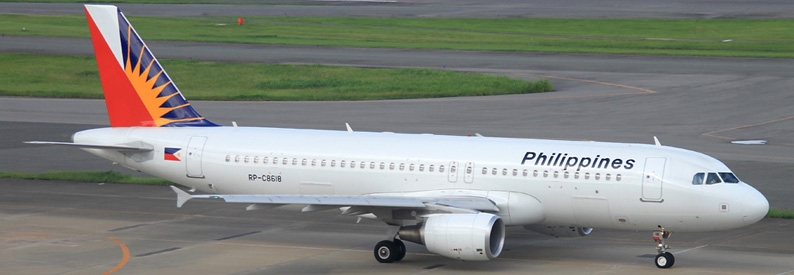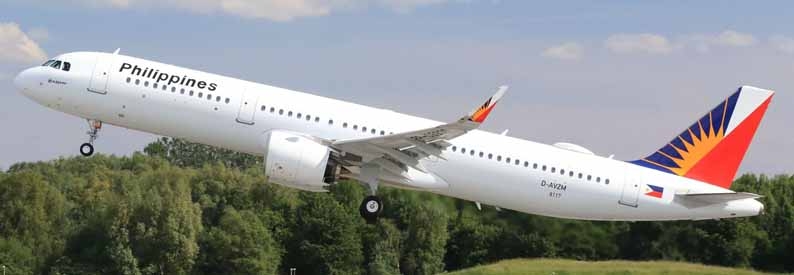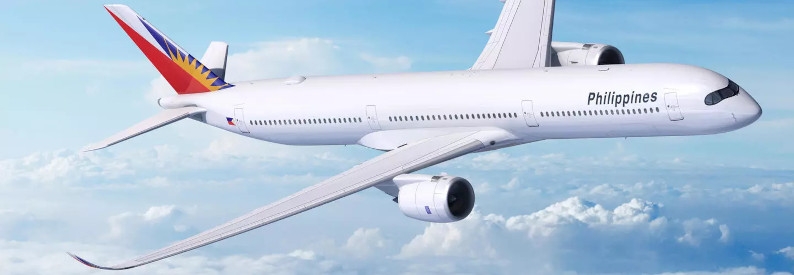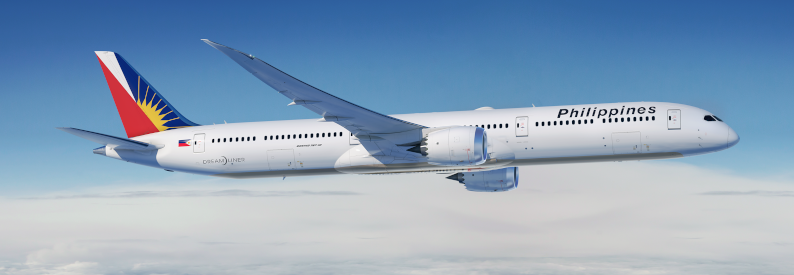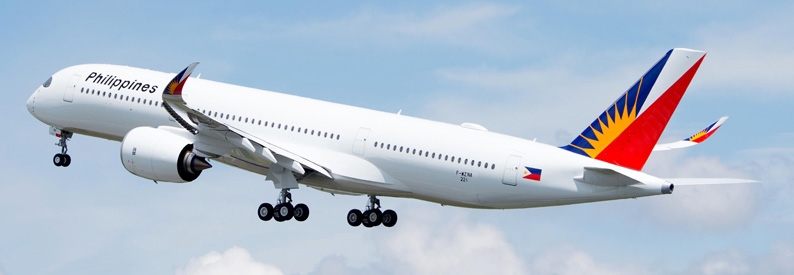
Philippine Airlines (PR, Manila Ninoy Aquino International) has no plans to defer its upcoming deliveries of five A350-1000s, and four A320-200 and A321-200N aircraft in 2026, and expects them roughly on time, president Richard Nuttall said during an on-stage interview at the Aviation Festival Asia in Singapore in late March 2026.
Nuttall said the carrier expects the A350-1000 deliveries to proceed "more or less on time," while noting "a little bit less certainty" around some A321neo arrivals scheduled for late 2026 and 2027. "If some of those delay a little bit, it may not be a bad thing for a number of reasons. But at the moment, we’re not talking about delaying anything," he said.
The airline has outstanding orders for thirteen additional A321neo jets and eight more A350-1000s. PAL has also been adding second-hand A320-200s to support domestic operations under PAL Express (2P, Manila Ninoy Aquino International); the first three of five units has been delivered since 2025 so far.
The fleet plan is aligned with expected traffic growth in the domestic market and North America, including the planned launch of a Manila Ninoy Aquino International-Chicago O'Hare service in November 2026.
Nuttall said that new aircraft are balanced against expiring leases, which allows the airline to adjust capacity by not renewing older units if demand weakens. "If the world doesn't grow quite as fast, we have the ability every year or so to parachute a couple of aircraft out without major pain," he explained.
Newer-generation aircraft offering around 25-30% better fuel efficiency also help the airline mitigate elevated jet fuel costs. In addition, PAL is retrofitting narrowbody and long-haul aircraft to standardise its hard product, with widebody upgrades expected to take two to three years due to seat supply constraints.
Per ch-aviation data, PAL and PAL Express operate a combined fleet of eighteen A320-200s, twenty-two A321-200s, six A321-200Ns, two A321-200NX, eleven A330-300s, two A350-900s, and one A350-1000, as well as thirteen DHC-8-Q400s.
Fuel crisis
In the same interview, Nuttall said the carrier's initial response to the rise of fuel prices was to review fuel surcharges, fares, and marginal routes. At the time, PAL has secured enough fuel for domestic operations until the end of June 2026, while visibility on international supply is limited beyond May.
Nuttall also warned that any prolonged disruption to fuel flows through the Strait of Hormuz could force airlines and governments to rethink supply chains and capacity planning. He said PAL was in a relatively strong position at this stage and could benefit from some North America flows of passengers rerouting away from Gulf hubs.
The airline has been profitable for four consecutive years and maintains a strong cash position, which Nuttall said gives it resilience amid fuel price volatility and supply uncertainty.
The Philippine Civil Aeronautics Board recently raised fuel surcharge rates from Level 8 to 19 for the April 16-30 period, allowing airlines to charge up to PHP15,397.2 pesos (USD260) on their longest routes.
- Type
- Base
- Aircraft
- Destinations
- Routes
- Daily Flights