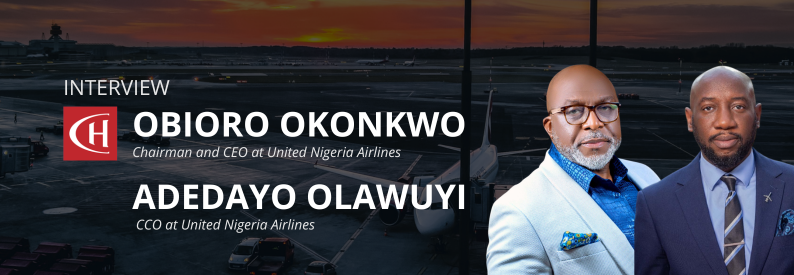
Adedayo Olawuyi, chief commercial officer of United Nigeria Airlines (UN, Enugu), has urged the Nigerian government to reduce aviation taxes and charges, warning that domestic carriers are struggling to remain viable as they generate revenue in local currency while facing US dollar-denominated operating costs.
Speaking during a panel discussion at the AeroWest conference in Lagos on September 2, 2026, Olawuyi said airlines face a structural currency mismatch, with aircraft financing, maintenance, pilot training, and simulator costs all payable in foreign currency despite ticket sales being denominated in Nigerian naira.
As broadcast by the country's Clarion Newschannel TV, Olawuyi identified financing costs as a major problem, noting that airlines contend with borrowing rates of 30% while operating on margins of less than 5%.
He also cited an industry-wide shortage of pilots, claiming that some Nigerian airlines had aircraft grounded because they could not secure sufficient flight crew.
Olawuyi added that the lack of MRO facilities in the region forces operators to send aircraft overseas for heavy maintenance, further increasing their exposure to foreign exchange costs.
Fuel prices have also sharply increased, he said, rising from around NGN900 naira (USD0.60) per litre in December 2025 to NGN3,000 (USD2.25) per litre this year, with airlines having little choice but to reflect the higher operating costs in ticket prices while maintaining safety standards.
Easing government charges and taxes would help lower fares and improve the industry's sustainability, he argued, warning against treating airlines primarily as revenue sources for other stakeholders.
Olawuyi further called for closer cooperation between government, regulators, airlines, and the wider tourism sector to improve air connectivity across West and Central Africa.
Carriers must deploy appropriately sized aircraft on the region's many thin routes, he added, noting that narrowbodies are often uneconomic where passenger demand is limited.