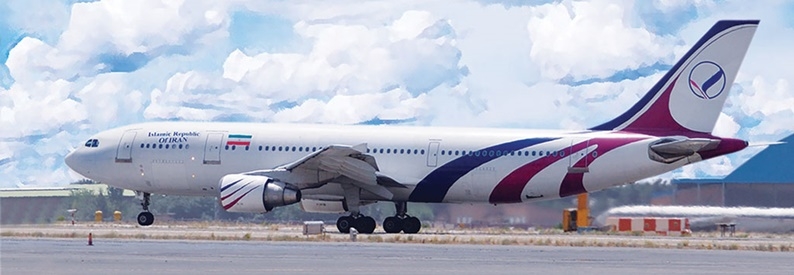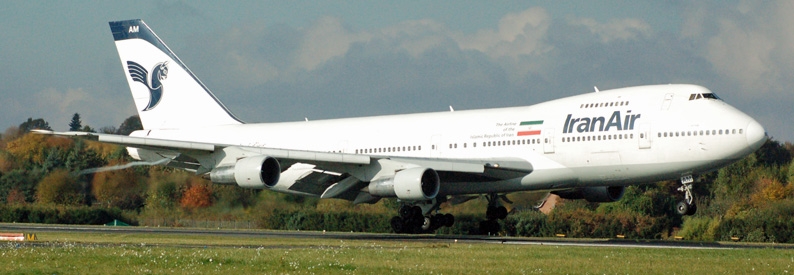
The United States Department of the Treasury's Office of Foreign Assets Control (OFAC) has sanctioned 27 Iranian airlines under Executive Order 13902, the first carriers designated since Washington determined on August 24, 2026, that Iran's aviation sector is subject to sanctions.
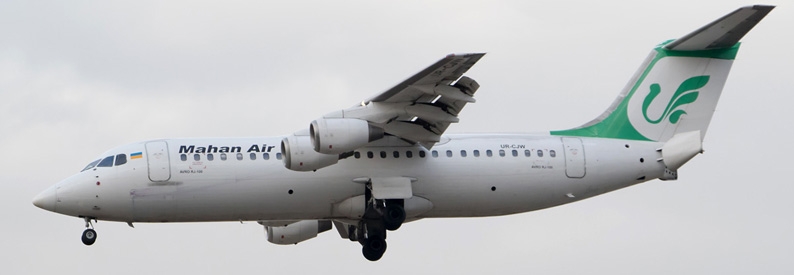
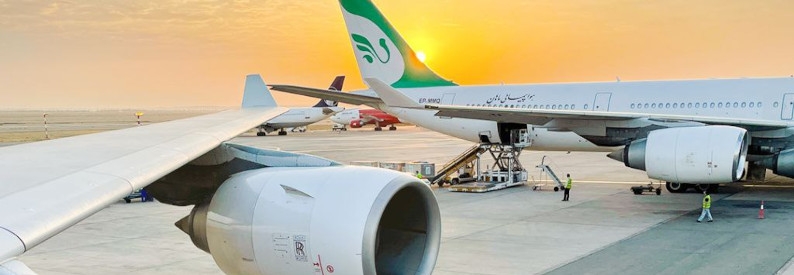
Announcing the measures on September 8, 2026, the US Treasury alleged that Iran's commercial airlines, particularly Mahan Air (W5, Tehran Mehrabad), have supported the Islamic Revolutionary Guard Corps (IRGC) by transporting weapons, personnel, and other illicit cargo while helping sustain the Iranian regime's economy.
The newly sanctioned carriers are Air Shiraz, Asa Jet, ATA Airlines (Iran), Atlas Air (Iran), Ava Airlines, Chabahar Airlines, Erwan Airline Company, Fly Kish, flyPersia, Iran Airtour Airlines, Iran Aseman Airlines, JSKY Airlines, Kish Air, Karun Airlines, Lad Airways, Mehr Airways, Nasim Air, Pars Air, Qeshm Airlines, Raimon Airways, Saha Airlines, Sepehran Airlines, Soroush Air, Taban Air, Toos Airline, Varesh Airlines, and Zagros Airlines (Iran).
The Treasury said the sanctions are part of its Operation Economic Outcast campaign to isolate Iran's aviation sector and cut off financial support for the regime and the IRGC.
The action was taken under Executive Orders 13224 and 13902 and builds on sanctions imposed in April and July 2026 targeting networks supporting Mahan Air, which has been under US sanctions since 2011 for allegedly supporting the IRGC Quds Force (IRGC-QF) and was designated by the State Department in 2019 under weapons proliferation authorities.
Further 36 targets
OFAC also sanctioned 36 additional entities and individuals that it claimed support Iran's aviation sector through front companies, foreign intermediaries, and procurement networks used to acquire US-origin aircraft and sensitive technology.
Treasury Secretary Scott Bessent said the measures deliver on Washington's pledge to impose "severe consequences" on those supporting the Iranian regime.
"Let this be a warning to anyone doing business with Iran’s remaining airlines, all of which we sanctioned today: You are at risk of being cut off from the global financial system," he said.
Aircraft procurement
The sanctions also target companies in the UAE, Türkiye, and the UK accused of helping Mahan Air to procure US-origin aircraft and support its flight operations.
According to the Treasury, Mahan Air acquired at least three B777s during the summer of 2026 through intermediary companies in the UAE and Oman after the aircraft left retired fleets. The US alleges that the transfers followed sanctions-evasion methods used in previous transactions.
Those sanctioned include:
- UAE-based ECT Aviation Support LLC and Aerobravo Airplane Management and Operation LLC;
- Türkiye-based Sky Phoenix Hava Yollari Tasimaciligi Ticaret Limited Sirketi;
- UK-based ECT Aviation Support LTD;
- ECT Aviation Support founder and CEO Ibrahim Ali Mohamed Mohamed Mahran.
Cargo and GSAs
In addition, four cargo service providers and general sales agents (GSAs) have been sanctioned for allegedly supporting Mahan Air's international operations:
- Türkiye-based S Sistem Lojistik Hizmetler Anonim Sirketi (S Sistem) is accused of coordinating shipments, including unmanned aerial vehicle (UAV) components and industrial equipment destined for Iran, on behalf of Mahan Air;
- Türkiye-based Mes Cargo is accused of serving as a GSA and coordinating shipments on behalf of Mahan Air;
- Malaysia-based Icargo SDN BHD (Icargo) is accused of providing GSA services to Mahan Air and of coordinating the shipments of US-origin parts to Iran on behalf of Mahan Air;
- Kazakhstan-based Tour Invest has allegedly served as a GSA for Mahan Air.
Crimes alert
Separately, the Treasury's Financial Crimes Enforcement Network (FinCEN) issued an alert urging financial institutions to increase scrutiny of transactions linked to Iran's commercial aviation sector, warning that Tehran continues to rely on front companies and international procurement networks to acquire US- and Western-origin aircraft, parts, and related technology.
The advisory identifies red flags to help banks detect procurement activity, including the use of front companies in Europe, the Middle East, Africa, and Asia posing as aviation, technology, or logistics firms.
Sanctions implications
The sanctions immediately block all property and property interests of designated persons within US jurisdiction or controlled by US persons. Entities owned 50% or more by sanctioned parties are also blocked, while US persons are generally prohibited from dealing with designated parties unless authorised.
The Treasury warned that violations may result in civil or criminal penalties. Foreign financial institutions facilitating significant transactions for sanctioned persons could face secondary sanctions, including restrictions on access to the US financial system.
Designated parties may petition for removal from the Specially Designated Nationals list, while FinCEN's whistleblower programme offers financial awards for information leading to successful enforcement actions.
- Type
- Base
- Aircraft
- Destinations
- Routes
- Daily Flights