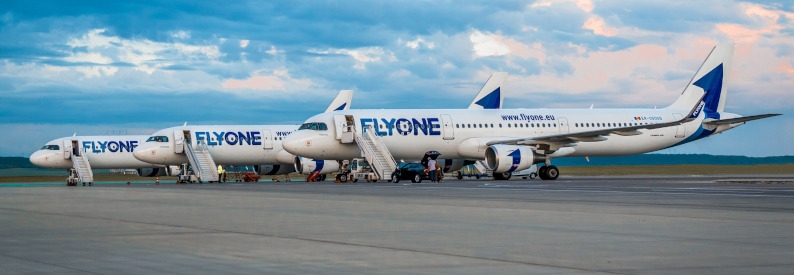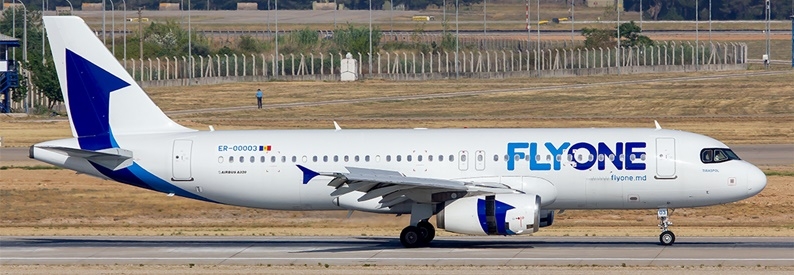
The shareholders of FlyOne (5F, Chisinau International) will refuse to sell their equity stakes despite a state-mandated change-of-control directive, and are instead preparing to shift future capital investments and operational growth outside the country, according to managing director Vladimir Cebotari.
Speaking during a televised interview on the "7 Zile" talk show broadcast on Moldova's Cinema 1 network on September 29, 2026, Cebotari stated that the carrier’s owners would not comply with demands by national security watchdog (Consiliul pentru Examinarea Investițiilor de Importanță pentru Securitatea Statului - CEIISS) to divest control.
"The shareholders will not sell their equity stakes. The group will continue its operations, but a portion of future investments will have to shift from the Republic of Moldova to other states," he said.
The dispute stems from a June 22, 2026, decision by CEIISS requiring the carrier to change its ownership after raising concerns over the airline's control structure. CEIISS is invoking a mandatory change-of-control clause under Article 11 of Moldovan Law No. 174/2021 on strategic investments. The directive originally gave the airline's shareholders 90 days to divest control, a deadline that has since been extended.
Expropriation attempt
FlyOne considers the order an attempt at forced expropriation and is repositioning its international growth strategy accordingly, Cebotari said.
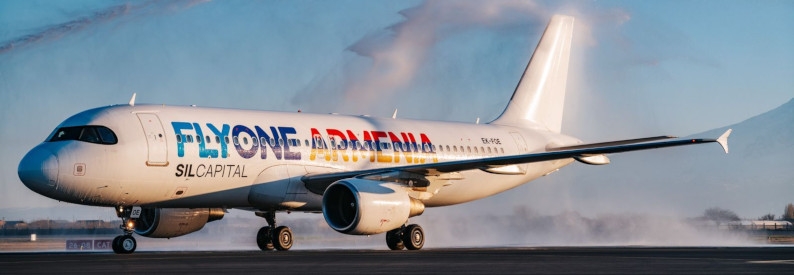
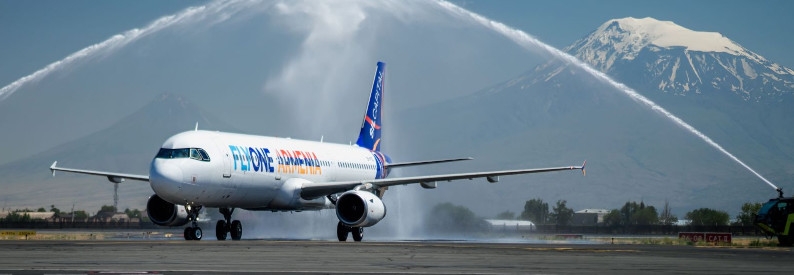
He said the group is structurally equipped to redirect investment, as the Moldovan market now represents only 25% to 30% of its overall activity. The broader business is decentralised across independent cost and management centres operating under separate air operator's certificates (AOCs) in Romania, Armenia, and Uzbekistan (FlyOne (Romania), FlyOne (Armenia), and FlyOne Asia).
"They didn't realise that we are not dependent on the company in Moldova. It represents 25% to 30% of our activity, while all of our primary growth points are outside the country," he said.
"A week after the decision was announced, we were called by a deputy transport minister from an EU country," he remarked. "In your own country, where you create 600 jobs and pay hundreds of millions in taxes, you are told you are not needed, while a foreign state immediately invites you in."
Cebotari, a former Moldovan justice minister, argued that the directive lacks legal validity, claiming the June meeting minutes were signed outside a formal council session without proper member participation.
He further asserted that Law No. 174/2021 was improperly applied and that routine operational expenditures, including aircraft leases, fuel procurement, ground handling, and air navigation, are explicitly exempted from strategic investment screening under Moldovan law.
Action plan
In response to the CEIISS directive, FlyOne has initiated international investment arbitration alleging unlawful expropriation without compensation, alongside proceedings before the Chisinau Court of Appeal and the European Court of Human Rights, Cebotari said.
He disclosed that over the past three years, the airline and its employees have been subjected to 13 law-enforcement searches, wiretaps, and surveillance, which he described as an abusive effort by third-party interests to force a business takeover.
According to Cebotari, Moldovan authorities justify the security examination because FlyOne operates near critical airport infrastructure and processes national passenger data.
Scrutiny has also centred on alleged political ties to Vladimir Plahotniuc, a US-sanctioned oligarch and former leader of the Democratic Party of Moldova (PDM). Cebotari rejected any commercial connection to Plahotniuc, saying their relationship was strictly limited to mutual party membership in the PDM before 2019 alongside hundreds of other members.
He emphasised that neither FlyOne nor its shareholders face any national or international sanctions.
- Type
- Base
- Aircraft
- Destinations
- Routes
- Daily Flights