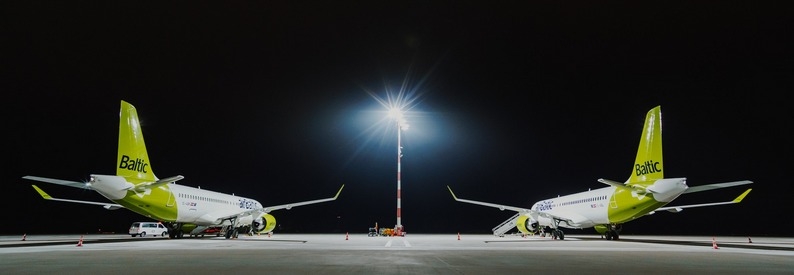
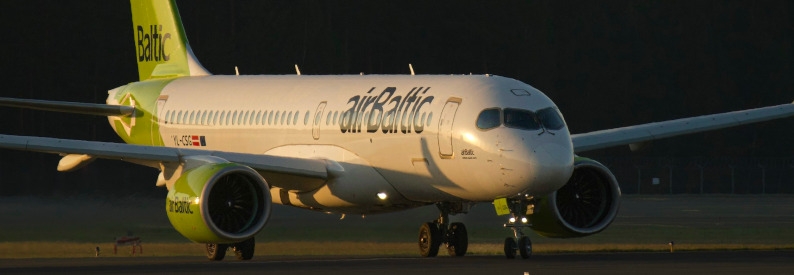
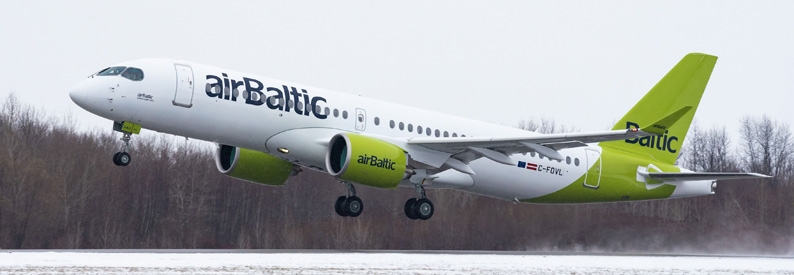
airBaltic (BT, Riga) will provide five A220-300 to Lufthansa Group airlines under wet-lease agreements in winter 2026/27, amid its ongoing Chapter 11 bankruptcy proceedings in the United States.
An Austrian Airlines (OS, Vienna) spokesperson told ch-aviation the Latvian carrier had confirmed it would deliver the agreed capacity as planned.
"This may include up to 21 additional fuel-efficient Airbus A220-300 aircraft in summer 2026 and five aircraft of this type in winter 2026/27, to be deployed across various Lufthansa Group hubs. This arrangement enables the Lufthansa Group to respond flexibly to additional customer demand. Planning for summer 2027 is still ongoing," the spokesperson said.
Meanwhile, airBaltic is seeking US bankruptcy court approval to assume an October 2026 wet-lease agreement with Austrian Airlines, together with related amendments and other commercial agreements with Lufthansa Group. The court has scheduled presentation of the proposed order for November 4, according to a filing seen by ch-aviation.
The proposed order would allow airBaltic to assume the agreements under Section 365 of the US Bankruptcy Code, deem existing defaults cured, and prevent Lufthansa Group counterparties from demanding deposits or other security from the carrier. It would also authorise airBaltic to continue fulfilling its contractual obligations in the ordinary course of business.
According to ch-aviation data, of airBaltic's fleet of fifty-four A220-300s, thirty-two are currently wet leased to Lufthansa Group airlines, including sixteen to Swiss, nine to Austrian Airlines, two to Lufthansa, and five to Brussels Airlines.
Austrian Airlines has previously terminated wet-lease partnerships swiftly when operators encounter financial difficulties, as was the case for Sweden's BRA - Braathens Regional Airlines.
The wider Lufthansa Group is also reducing its reliance on ACMI, with fewer wet-leased aircraft planned for summer 2027. The shift comes as higher fuel costs threaten demand and airlines anticipate needing less capacity.
The European ACMI market has contracted sharply since the post-pandemic boom, with some providers already withdrawing aircraft because they cannot secure contracts.



Editorial Comment: Updated with Austrian Airlines comment. - 23Oct2026 - 15:45 UTC