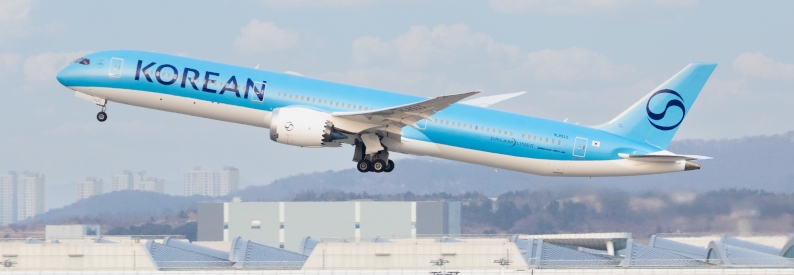
Korean Air (KE, Seoul Incheon) and Asiana Airlines (OZ, Seoul Incheon) will integrate on December 17, 2026, after the respective boards approved the merger agreement on May 13. The two carriers signed a contract to execute the merger the day after.
Korean Air will absorb all assets, liabilities, and employees of Asiana Airlines. The carrier submitted a merger application to South Korea's Ministry of Land, Infrastructure and Transport on May 14. In June 2026, it also plans to apply for amendments to its Operations Specifications (OpSpecs) to incorporate Asiana Airlines' aircraft and safety systems under Korean Air's existing air operator's certificate.
The merger ratio was set at one Korean Air share for every 0.2736432 Asiana Airlines shares, resulting in an expected capital increase of KRW101.7 billion won (USD68.3 million) for Korean Air.
Asiana Airlines will hold an extraordinary shareholders' meeting in August 2026 to vote on the merger. Korean Air, meanwhile, will approve the transaction through a board resolution as the deal qualifies as a small-scale merger under South Korea's Commercial Act.
The two airlines are also consulting the Korea Fair Trade Commission to finalise the integration plan for their frequent-flyer programmes.
The consolidation follows an initial acquisition agreement signed in November 2020, when the South Korean government and creditors injected KRW3.6 trillion (USD2.4 billion) to stabilise Asiana Airlines during the COVID-19 pandemic. Korean Air said it has since repaid the public financial support.
As previously reported by ch-aviation, Korean Air plans to complete the acquisition of the remaining 36.1% stake in Asiana Airlines in the second quarter of 2026 and gradually phase out the Asiana Airlines brand and corporate entity after the integration. The airline has been working to align operational standards, employee compensation, and safety systems ahead of the merger.
Korean Air is also upgrading its operational infrastructure ahead of the integration, including renovations to its operations control centre and cabin crew training facility in Seoul, as well as expansions to engine maintenance shops and hangars at Seoul Incheon.
"The integration will elevate Korean Air's global market presence and establish Incheon International Airport as a dominant global hub through optimised network connectivity and increased transit efficiency," the carrier said.
- Type
- Base
- Aircraft
- Destinations
- Routes
- Daily Flights