Air Transat (TS, Montréal Trudeau) is approaching a pivotal moment in its fleet strategy, with the carrier expecting to decide within the next few years how to replace its ageing A330 fleet. While no formal decision has yet been taken, chief revenue officer Sebastián Ponce indicated that the timeframe for doing so is becoming increasingly clear.
The airline currently operates a fleet of A330-200s and A330-300s that remain well suited to its highly seasonal leisure business model. However, in an interview with ch-aviation during the IATA Annual General Meeting in Rio de Janeiro, Ponce stressed that the A330s will eventually need to be replaced.
"At a point in time, we will need to replace our A330s. So even though we are very happy about them because they're low-cost old aircraft that fit very well into our seasonality, at a certain point around 2029-2032, we will be in need of replacing them. So we're working on that, how to replace them," he said.
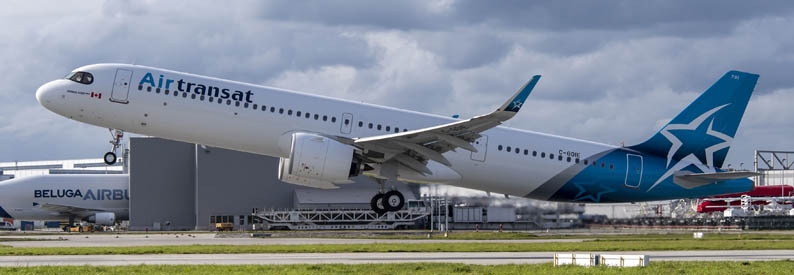
The company operates a fully dry-leased fleet of eight A321-200s, nineteen A321-200NX(LR)s, thirteen A330-200s, and two A330-300s. The widebody fleet averages 20.5 and 18.7 years of age, respectively.
The Canadian carrier is not yet ready to commit to a potential new aircraft type, as it is currently finalising its strategic plan, which must align with the ongoing economic revamp undertaken by current management through what it calls the Elevation Program.
Potential for the XLR
Air Transat's only outstanding order is for four A321-200NY(XLR)s, which are scheduled to enter the fleet in late 2027. Ponce believes the aircraft will enable the airline to deepen its presence in thinner transatlantic markets that cannot sustain widebody operations. He described it as the natural evolution of the A321LRs already in the fleet.
"We believe it's a great aircraft that will improve around 15% range of the LR. So that will add some new destinations, particularly in Europe, where we can go for thinner markets farther away," he explained.
Several potential markets are already being evaluated, including Rome Fiumicino and destinations in northern Italy, Central Europe, and North Africa. The executive added that the XLR could also improve the economics of existing routes currently operated by the LR, such as Lima International, where payload restrictions reduce the number of seats that can be sold.
"Today we're selling around 185, 187 [seats]. We will be able to increase the sellable capacity by, say, 8, 9, 10 seats."
However, all of this remains theoretical, as the performance of the XLR within Air Transat's specific operating environment still needs to be validated.
"You have the theoretical range of the manufacturer, and then based on your specifics, you can push the aircraft. We are very good at pushing the limits of our assets," he said.
Porter partnership
Asked whether Air Transat could envisage introducing smaller aircraft types, such as the Airbus A220 or Embraer E2 families, Ponce ruled out such acquisitions in the foreseeable future.
While both aircraft types are attractive and fulfil their intended roles, he said, Air Transat's partnership with Porter Airlines (P3, Toronto Billy Bishop City Centre) already provides the capabilities those aircraft would offer, while also allowing the company to improve connectivity with smaller Canadian cities.
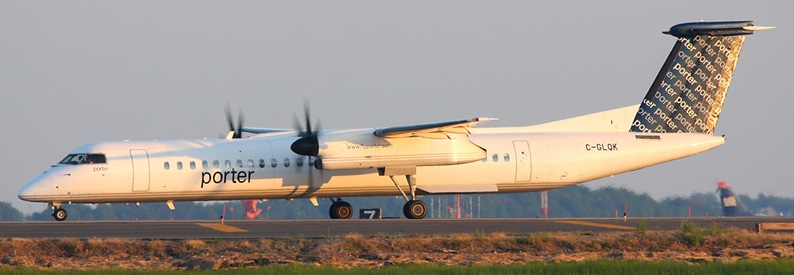
"The A220 or the Embraer planes are a great tool for some North American destinations and a few of them in the south. But what we are doing with Porter helps us to complement ourselves in terms of fleet," he said, adding that Porter Airlines has the appropriate aircraft to fill these gaps through its E195-E2 132-seaters and smaller DHC-8-Q400s.
"When you take a look at both companies within the joint venture, we have four aircraft types that already address the vast majority of what we can do," he summarised.
Ponce added that the partnership with Porter is also helping Air Transat mitigate the seasonality inherent in its business model by generating additional connecting traffic.
"To give you an example, in the month of May we are increasing our capacity by 15% while in the peak we are just increasing by 1%. So the connecting flows are strong and improving," he said.
Reorganising the company
Air Transat entered 2026 with a need to restructure the company's finances, as it faced both external and internal pressures. The latter stemmed from activist investor Financière Outremont Inc, which sought to appoint its own board of directors, alleging that the carrier's management had failed its shareholders.
Against this backdrop, the company introduced the Elevation Program, which Ponce described as a broad restructuring effort designed to improve profitability by simultaneously addressing costs and revenues. He said it was about "turning every corner of the company and both reducing cost and increasing revenues."
Among the external factors that also contributed to the urgency of the restructuring were the engine recalls affecting Pratt & Whitney-powered aircraft. At one point, "we had more than six aircraft grounded out of 19. This was hampering strongly our financials," he said.
Elevation involved multiple initiatives, including a comprehensive redesign of processes, reviews of supplier contracts, organisational restructuring, enhancements to revenue management, and optimisation of ancillary revenues.
"We managed to reach our targets in terms of EBITDA impact. So our aim was to target CAD100 million [USD71.5 million] per year in terms of gains both from revenue and cost," Ponce said.
While Air Transat believes it has established the foundations for a stronger and more profitable business, Ponce acknowledged that the carrier continues to face significant external pressures, particularly from elevated fuel prices and disruptions affecting parts of its network.
The airline has responded by adjusting fares and introducing fuel surcharges, particularly in markets where demand has remained resilient.
"We managed to react in terms of pricing, especially via fuel surcharges. We managed to put in place some of them especially for transatlantic flights where the demand was very strong and clients were willing to pay despite the price increases."
However, Ponce cautioned that airlines cannot pass on cost increases indefinitely.
"There is kind of a ceiling to what the market can afford in terms of price increase," he said.
Recently, Air Transat said it intends to apply to the Canadian government’s Liquidity for Airline Sector Resilience facility, known as LASER. It plans to draw CAD150 million (USD107 million) to provide additional support, as the company posted a higher-than-expected CAD79 million (USD56.5 million) net loss during the most recent quarter.
- Type
- Base
- Aircraft
- Destinations
- Routes
- Daily Flights