Flightpath Charter Airways (KNT, Kitchener) is expanding with six aircraft, its president, Robert Brunnenmeir, told ch-aviation in an exclusive interview. The company further sees significant growth potential at a newly opened base at Calgary, Alberta, and in the United States where operations are expanding through Flightpath Air.
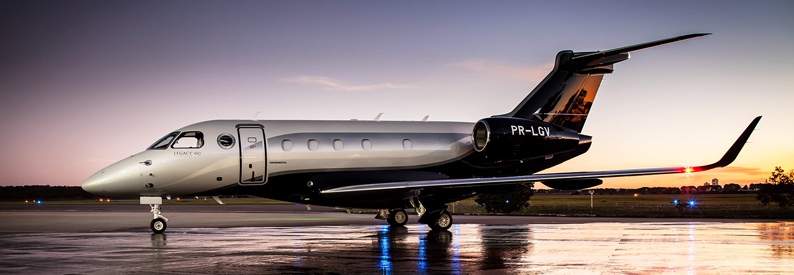
The additions comprise two Phenom 300EVs, the latest evolution of the Phenom 300 unveiled by Embraer Executive Jets in July, two Praetor 600Es, an upgraded variant of the Praetor 600 announced in early 2026, a Challenger 3500, and a Global 8000.
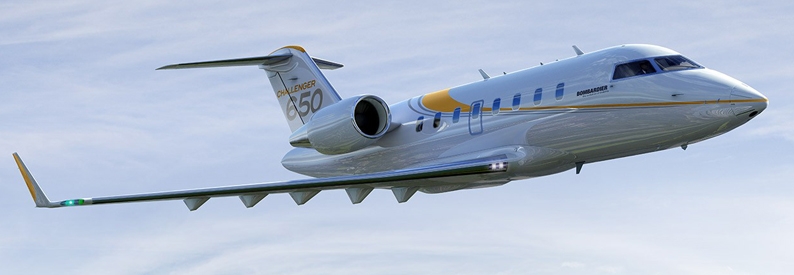
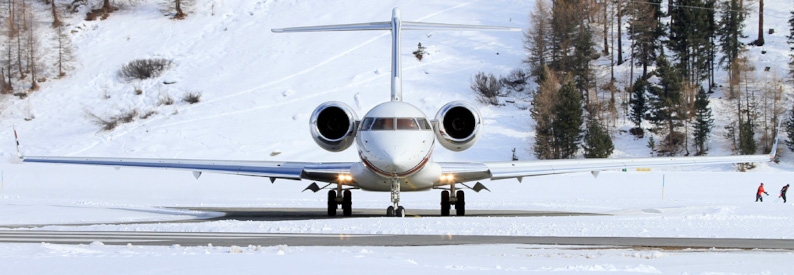
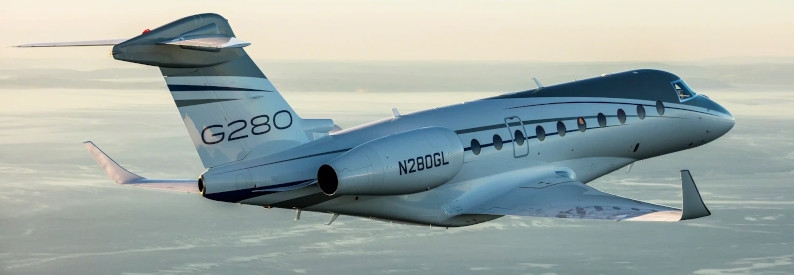
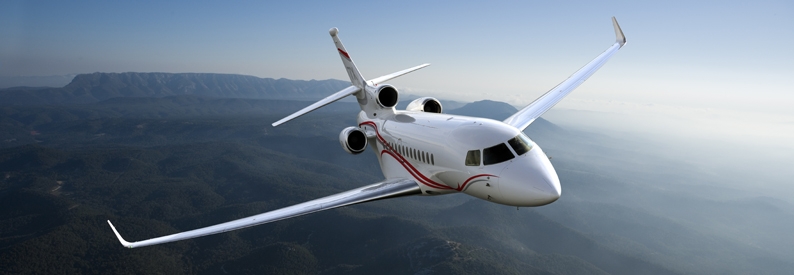
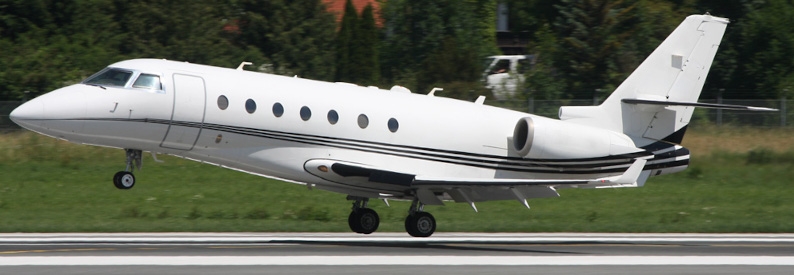
Flightpath currently operates a diverse fleet comprising two Learjet 45XRs, a Learjet 60XR, a Learjet 75 Liberty, a Challenger 605, a Challenger 650, a Global Express XRS, a Global 6000, a Global 7500, a Citation Jet 3, a Falcon 7X, a Phenom 100, two Phenom 300s, four Phenom 300Es, a Praetor 500, a Praetor 600, a G150, a G200, a Cessna (twin turboprop) 441, a Piaggio Aerospace P.180, and a PC-12.
In the United States, Flighpath Air's Part 135 certificate covers a Phenom 300, while a Challenger 605 is currently in the process of conforming with the Federal Aviation Administration (FAA). “We have a few prospects pending confirmation,” Brunnenmeir said.
Managing such a diverse fleet presents challenges, but Flightpath embraces the approach. “We have people who enjoy learning more about different aircraft,” he added.
The company has no fixed fleet target, choosing instead to focus on service. “I want to be the leading management and charter company in Canada and one of the leading ones in North America, but that does not necessarily mean being the largest,” Brunnenmeir noted.
Management, charter combined
Brunnenmeir founded Flightpath in 2006 with a single Piper (twin piston) Navajo. The company gradually expanded into turboprops, including a Cessna 441 and a King Air B200 Beech (twin turboprop), before adding a Citation Bravo in 2011. “The main challenge was getting started. We had our ups and downs, but we've done well through all of that,” he noted.
Flightpath's business model has two segments, aircraft management being the first. The company handles all aspects of aircraft ownership on behalf of clients, leveraging scale and experience to reduce operating costs. “We negotiate several aspects, including fuel, training, FBO expenses, and so on,” Brunnenmeir said.
The company also manages regulatory requirements, while dispatch teams coordinate flights according to each owner's requirements. “Owners would rather not deal with all the logistics. They just want to own the aircraft, fly it, and pay a reasonable amount for it,” he added.
Flightpath's second business segment is charter. “That ties nicely with management. In most cases, owners leave their aircraft unused for a considerable amount of time. We use the aircraft and sell those hours to charter clients, sharing the revenue with the owner, who retain most of it,” Brunnenmeir explained.
Charter revenue alone does not make aircraft ownership profitable but helps offset costs that continue even when an aircraft is not flying. “Insurance, crew salaries, hangar, and other fees. There are many costs that will not disappear if the aircraft is parked, and that's where charter helps offset them,” he noted.
The charter operation allows Flightpath to serve customers who do not need to own an aircraft. “Some people just want to go on a family holiday, attend a business meeting, or travel to a remote location underserved by commercial aviation. That's where we jump in,” Brunnenmeir said.
Charter path to ownership
Flightpath's typical client is a private individual who leads a corporation, with time often being their primary consideration. With ongoing challenges affecting commercial aviation, executives would rather not be caught up in delays. First- and business-class travellers are increasingly turning to business aviation, starting with charter before moving into aircraft ownership.
Ownership can become justifiable once charter customers fly more than 100 hours a year. “We can get another 200, 300, or 400 hours of charter, and it starts to make sense to own an aircraft,” Brunnenmeir explained. Customers are then presented with a budget covering the acquisition price and operating costs.
The right aircraft ultimately depends on the owner's mission profile. “Different OEMs have different aircraft for different profiles, and we need to first speak with the owner before proposing the most suitable options,” he said.
Older aircraft can be particularly challenging, despite a lower acquisition price. “You might be getting a jet for a relatively cheap price, but it usually comes with higher operational costs and highly unpredictable maintenance. Parts are not cheaper than in a new model, and their availability is lower,” Brunnenmeir noted.
Diverse market
Most of Flightpath's clients are based in Toronto and Montreal. Earlier in 2026, the company expanded into western Canada, basing a Phenom 300E and a Falcon 7X in Calgary. “Our sales team constantly gets new client requests for charters, we're also in talks with new management clients in western Canada. By the end of the year or early next year, we expect to have more aircraft there,” Brunnenmeir said.
Expansion into Calgary generated demand for services to Scottsdale and southern California, particularly Los Angeles and San Diego. Alberta is a key centre for Canada's oil and gas industry, creating additional demand for private aviation. Flightpath serves clients travelling north for work in the natural resources industry.
“Whether it's prospecting, FIFO, mining crews, geologists, or bankers that need to see the project with their own eyes for investment, we're flying all these people,” he said. The ability to operate on gravel runways and access airports with short runways makes turboprops particularly practical for such missions, while offering a more economical business tool than a jet.
Vancouver represents another potential growth market, although Brunnenmeir said the company intends to expand cautiously. “We want to be thoughtful about growth. We would rather not get into a new market and not give our full attention.”
During summer and autumn, Flightpath sees regular demand for travel to Europe, both for holidays and business. Operating in Europe presents additional challenges. “Europe in the summer is very difficult for parking, we're constantly negotiating there,” Brunnenmeir noted. Aircraft often have to reposition to smaller airports, while shorter runways can require additional fuel stops.
Following the outbreak of the conflict in the Middle East, higher fuel costs have been passed on through a weekly adjusted surcharge added directly to charter prices. Despite the increase, demand has remained resilient. “Customers haven't stopped flying, they grew accustomed to flying private, and they understand what is going on. Everyone else is dealing with the same pressures on fuel,” he said.
US as opportunity
Flightpath sees significant room for growth through Flightpath Air in the United States, where the market is considerably larger than in Canada. “We can leverage our success at home,” Brunnenmeir said, pointing to a population roughly 10 times larger than Canada's and a significant concentration of businesses as key growth drivers.
Florida was the natural starting point, given the number of Canadian clients who spend the winter there. “We have our fleet going back and forth daily down to Florida,” he noted. The same seasonal migration extends beyond Canada, with growing concentrations of population and wealth in Miami, Fort Lauderdale, and Palm Beach attracting people and businesses based in Boston, Washington, New York, California, and Chicago.
The opportunity eventually led Flightpath to Desert Jet, which the company jointly acquired with a United States partner. “Holding Part 135 certification for aircraft with 10 or more passengers was an advantage,” Brunnenmeir noted. Flightpath has since moved the company's FSDO between California and Pittsburgh, Pennsylvania, bringing the operation closer to Canada.
For Flightpath, Florida is serving as a gateway to South America, with charter services expanding to destinations in Brazil, Argentina, and Chile.
Leveraging scale for maintenance
Flightpath has no plans to bring MRO operations in-house, keeping the focus on aircraft management. “There are many complexities and staffing issues in MRO,” Brunnenmeir noted.
He pointed to a potential conflict of interest when management companies operate their maintenance divisions. “They need to keep maintenance busy, ending up doing more work than needed. When the invoices go internal, they're not necessarily being analysed.”
Instead, Flightpath focuses on developing expertise across different aircraft types and OEMs while maintaining strong relationships with manufacturers. “Our purchasing power and leverage makes them want to get more of our business,” he said.
That leverage has proved valuable when parts are difficult to source. “When we need to get a part, we can. We put the pressure in a friendly way,” he said, citing a windshield shortage two years ago as an example. “Even then, we're always able to secure those.”
Recruiting and retaining
Crew recruitment proved challenging after COVID-19, with Flightpath experiencing higher turnover and a sharp decline in applications. “Before we would get 50 applications, after we would get 10 or less,” Brunnenmeir said. The shortage was more pronounced among captains, while first officers were easier to recruit due to a larger pool of pilots entering the industry or seeking to progress onto larger aircraft.
Over the past two to three years, however, turnover has declined while applications have increased. “We've built a reputation, a culture, and are considered a great place to work,” he noted.
Flightpath developed a mentoring system for junior pilots, who fly alongside experienced pilots rather than being paired with other junior crew. “Our insurance company likes that approach, we go beyond the bare minimum for our training,” Brunnenmeir added.
The same approach extends to service standards, with Flightpath viewing crew as a key part of the client experience. “Our crew is our front line. That's who the client sees, and we train them to have a really high level of service,” he added.
Driving operational efficiency
Flightpath works closely with regulators and industry partners to improve processes and identify more efficient ways of working. “We like to hear what Transport Canada, the FAA, EASA, CAE, or FlightSafety have to say,” Brunnenmeir noted.
As part of this continuous improvement effort, Flightpath is introducing new accounting procedures. Each flight generates multiple invoices, which previously required manual review. “Now all of that is automatically assigned with our flight operations,” he said. The change reduces the administrative workload while improving accuracy and transparency for owners.
Flightpath is further developing enhanced reporting, owner portals, and real-time budgets. “Clients can see this, and we avoid having uncomfortable conversations at the end of the year as they know why there were price escalations, for example,” Brunnenmeir concluded.