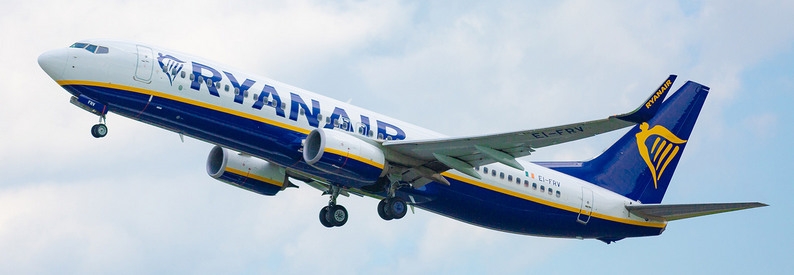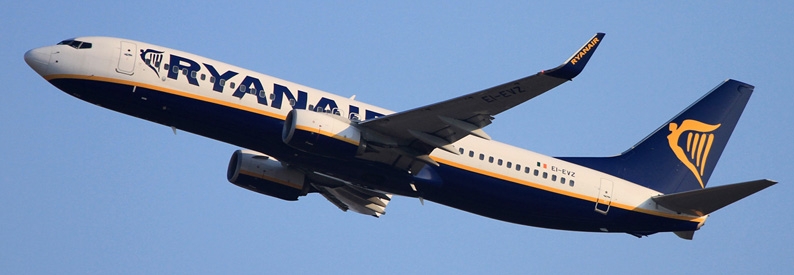
Ryanair (FR, Dublin International) has renewed calls for the Irish government to abolish Dublin International's 32 million passenger-per-year cap following a ruling by the Court of Justice of the European Union (CJEU) on October 15, 2026, confirming that legally binding planning restrictions can be considered when allocating airport slots.
In reaction, the Irish low-cost carrier argued that the restriction, imposed through development consents granted in 2007 and 2008 by the Irish Aviation Authority (IAA), was outdated given the airport's infrastructure and projected traffic growth. Dublin handled more than 32 million passengers in 2024, according to the airport's forecasts cited in court proceedings, while Ryanair expects traffic to exceed 36 million in 2026.
The airline said Dublin's second runway, funded through higher airport charges paid by airlines and passengers, provides capacity to accommodate up to 60 million passengers annually. It argued that the cap unnecessarily restricts route development, competition, and passenger choice.
Ryanair called on the Irish government to honour its 2025 commitment to abolish the restriction. Although legislation has been passed enabling the transport minister to remove the cap, the government has yet to do so, the airline said. The Dublin Airport (Passenger Capacity) Act 2026 was signed into law on July 16, 2026.
Ryanair Holdings CEO Michael O'Leary warned the issue could affect Ireland's international connectivity, citing threats by US airlines to withdraw Aer Lingus' landing rights in New York if the cap remains in place.
The US government, acting on a request from the Airlines for America (A4A) lobby group, has threatened Ireland with traffic rights cuts if the cap is not lifted.
The CJEU ruling
In its judgment, the CJEU ruled that "an annual passenger limit set down in a development consent relating to an airport may be taken into account when allocating slots to airlines."
The court said European Union slot allocation regulation requires coordination parameters to reflect all relevant technical, operational, environmental, and legal constraints. It found that ignoring a binding passenger limit could result in slots being allocated that the airport operator could not legally use. "The court concludes that such a limit must be taken into account when determining the coordination parameters."
The ruling also clarified that the restriction could, in exceptional circumstances, prevent airlines from retaining historic slots they would otherwise be entitled to renew, as slot priority depends on available capacity.
The CJEU did not decide the underlying dispute, leaving it to Ireland's High Court to rule on challenges brought by Dublin Airport operator daa and several airlines against the IAA decision. "It is for the Irish High Court to rule on the actions against the decisions relating to Dublin Airport in the light of that interpretation of EU law," it said.
- Type
- Base
- Aircraft
- Destinations
- Routes
- Daily Flights