As plans to revamp India’s UDAN [Ude Desh ka Aam Naagrik] regional connectivity scheme await cabinet approval, at least one regional airline is hoping for changes that will improve carriers’ chances of operating routes sustainably.
“It has been a fantastic policy,” said Prem Garg, CEO and accountable manager of IndiaOne Air (I7, Ahmedabad) of the scheme. “However the issue is sustainability, scaleability, and regulatory bottlenecks.”
Speaking exclusively to ch-aviation, Garg said the carrier is eager to see what changes the government plans to make to the scheme, which has not only helped breathe life into remote airports but is also vital support for smaller carriers.
As ch-aviation previously reported, the Indian government is exploring new ways of funding the connectivity scheme in line with plans to expand subsidised routes to 120 new destinations over the next decade.
Rapid development
Launched in 2016, the initiative caps fares on about 50% of the seats on UDAN routes while providing viability gap funding (VGF) on seats to selected airline operators. A levy on air tickets, currently INR6,500 rupees (USD70), covers 80% of the VGF that the national government allocates to participating airlines, while state administrations chip in the remaining 20%.
The initiative now covers 651 routes across the country - out of 900 initially offered - and serves 93 unserved and underserved airports, including 15 heliports and two water aerodromes as of November 30. Unserved airports are defined as those that have not seen a commercial flight for 12 months, while the underserved have fewer than two commercial flights daily.
Since the scheme began, the government has allocated about INR43 billion (USD470 million) in gap funding, while INR40 billion (USD436 million) has been spent on developing airports. About 15.7 million people have flown on 327,000 flights, according to government figures. An estimated 40 million people are expected to travel by air in the next decade if the cabinet gives the go-ahead to the revamped policy.
Garg anticipates that the scheme will develop rapidly in the second phase in which government is expected to allocate an additional INR300 billion (USD3.3 billion) to UDAN operations. Of that, INR180 billion (USD2 billion) will be spent on airport development and INR120 billion (USD1.3 billion) on viability gap funding.
The gap funding is allocated for three years according to each carrier’s business plan, Garg noted. At the end of the period, the route is expected to have become self-sustaining. The challenge, he added, is capping the fare while also not affecting the airline’s costs. “That is the biggest problem,” he said.
If a carrier has cost-per-seat of INR10,000 (USD110) while the tickets are sold at INR3,000 (USD33), the government is on the hook to cover the remaining INR7,000 (USD77) just for the carrier to break even.
“So I sustain that for three years, but then government stops [paying] the 7,000 rupees,” said Garg. “I cannot suddenly price the ticket at 10,000 rupees. Nobody will buy it, because they’ve become comfortable paying 3,000.”
The carrier would be unable to increase the fare even slightly, he added. “How will I know what the break-even is, how much demand there is or what the paying capacities are of the passengers in that region?”
“We have to be efficient”
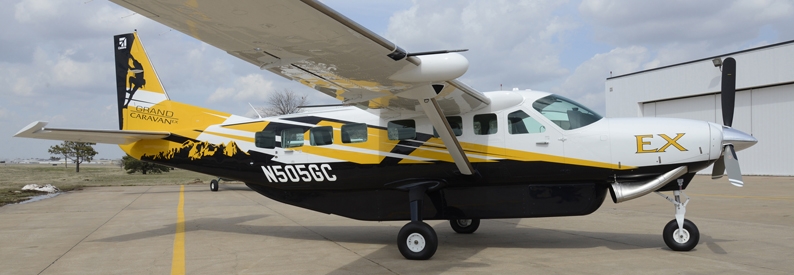
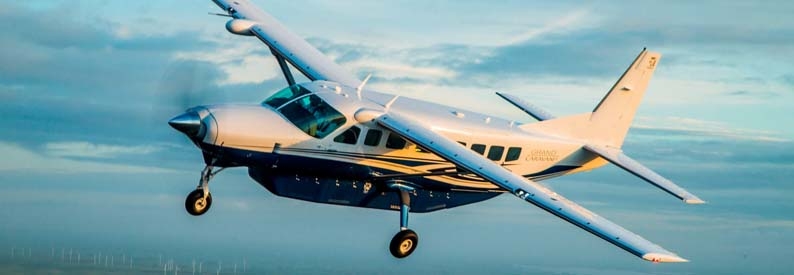
Garg noted that there are other stringent regulations that airlines must comply with. While it operates three Cessna (single turboprop) Caravan 208Bs, IndiaOne Air’s headcount is 150 people. That includes 20 pilots along with 130 technicians, administrative staff, and security personnel.
“We cannot alter the regulations, so we have to be efficient,” he said. That entails optimal aircraft utilisation as well as keeping a tight rein on costs and overheads. Even so, without ongoing government support, the service would not be viable.
Garg favours the government enacting policy reforms on ATF [aviation turbine fuel] taxes, airport charges, state-backed financing and capital support, and aircraft leasing and regulatory approvals. These changes would "go a long way" towards ensuring sustainable and scalable scheduled commuter operations in India, he said.
He expects the government will continue to reduce gap funding while increasing fare caps. At the same time, carriers will be permitted to raise fares, which will ultimately show where the passenger loadings are sustainable enough in which passengers are paying parity while also revealing how much they are able to pay.
“Then you can decide whether this route will be viable or not,” he said.
He noted that the carriers in the "small category" such as India OneAir and Fly91 (IC, Goa Dabolim), have different challenges to carriers using bigger aircraft. Small aircraft are viable on routes of 300 to 500 kilometres, while larger aircraft such as narrowbodies are more cost-effective on routes of 1,500-2,500km. Aircraft in the “ATR-class”, in turn, are viable on routes of 1,000-1,500km.
Twin-turboprop sweet spot
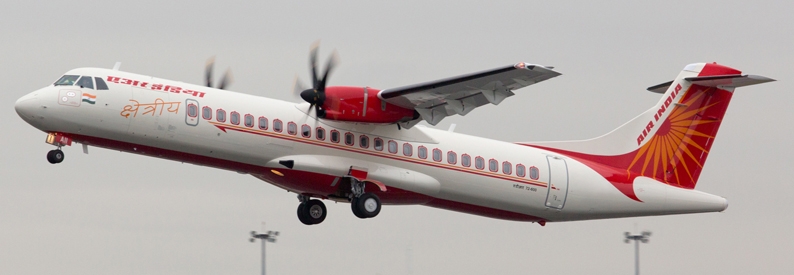
Regional carrier Fly91, which currently operates three ATR72-600s, has benefited greatly from the UDAN scheme, helping the carrier stabilise and scale early operations, CEO Manoj Chacko, told ch-aviation.
“I personally think it's a fantastic scheme,” he said, adding that it is a critical enabler for regional airlines like Fly91, especially during the early life cycle of new routes. “It provides the confidence to commit aircraft and resources to underserved destinations that need time to mature.”
The airline currently operates 14 RCS flights and seven key sectors under UDAN, all of which have gained traction and steady demand, and have unlocked latent traffic in underserved markets such as Jalgaon, Malvan, and Agatti Island.
Using ATR - Avions de Transport Régional turboprops has been a critical part of making the strategy work, he said, noting that the very nature of the scheme means that many of the airports the government wants carriers to serve are inaccessible to bigger aircraft such as narrowbodies.
Excluding that entire category of aircraft leaves the sector with airlines like Fly91 “and a couple of other players”, he said. Other ATR operators include IndiGo Airlines and Alliance Air (India), both of which operate UDAN routes.
Chacko noted that the scheme’s main challenges stem from infrastructure issues rather than erratic demand. Emerging airports often have limited ATC availability, restricted operating hours, no night-landing facilities, and inadequate crew accommodation. This, in turn, hampers scheduling flexibility and aircraft utilisation.
“Such issues are typical of new regional airports and tend to ease as traffic builds,” he said. Resolving the challenges, meanwhile, requires coordinated action between airport operators, local administrations, and regulators to scale infrastructure in tandem with demand.
He also urged the government to adhere to phased extensions of UDAN support, which would help markets reach commercial maturity without service disruptions.
“Strengthening domestic aircraft financing through Indian banks would further reduce dependency on subsidies and improve long-term sustainability,” he added.
Meanwhile, the carrier plans to pitch for additional RCS routes that align with its regional strategy. “Expansion is measured and data-led, with a focus on tier two and tier three cities where infrastructure viability exists,” Chacko said.
It plans to grow its fleet to 30 aircraft over the next five years, while at the same time adding a new base every year.
“The fleet expansion will continue to centre exclusively on ATR72s, reflecting our commitment to being a pure-play regional airline rather than diversifying into larger aircraft categories,” he added.
Meeting the demand
The regional connectivity scheme has also been a significant factor in the growth of regional carrier Star Air (India) (S5, Belgaum), its CEO Simran Singh Tiwana told ch-aviation.
“UDAN from the very beginning has given us that helping hand that any new airline needs to come into existence when the environment is not that easy,” he said.
Since its founding in 2017 and first flight in January 2019, the airline has focussed on serving India’s tier-two and -three cities, which account for 65% of India’s population of 1.4 billion people.
“[That] is a huge number itself, and to get that population moving on routes that were not traditionally tried by other airlines is actually a remarkable win for us,” he said.
Tiwana noted that viability gap funding had made the airline’s operations more financially sustainable, giving it some protection while it experimented on new routes.
The carrier operates four E145s and eight E175s and plans to expand its fleet to 50 aircraft by 2030. Tiwana credits the Embraer jets for allowing the airline to operate longer sectors while also meeting the demand for services.
He pointed out, however, that Star Air has been “very conscious” in both its route selection “and pricing everything right”, adding that the success of the scheme can also be measured by comparing the number of new routes and connected city pairs pre- and post-UDAN.
“A lot of these routes that did not exist before UDAN are being operated today, even commercially,” he said. Some routes that airlines had previously shied away from because they were viewed as uneconomic, were launched, “and some of them worked,” he said. “So it's an experiment which kind of led to newer discoveries.”
Furthermore, the scheme had generated additional economic benefits through direct and indirect employment in the cities Star Air serves.
“Connecting these cities has a huge multiplier effect, not only with employment but also development,” Tiwana said. “Getting industries interested in setting up in smaller cities is something we have seen happening through the routes that we have been operating.”
- Type
- Base
- Destinations
- Routes
- Daily Flights