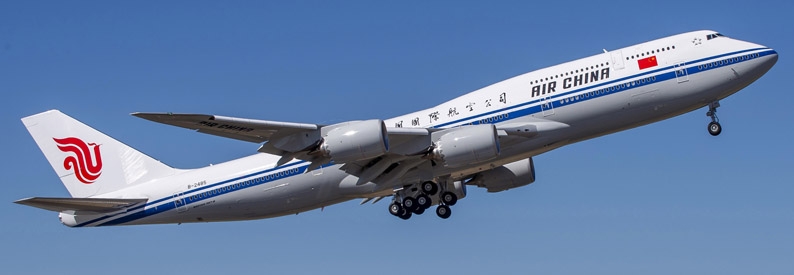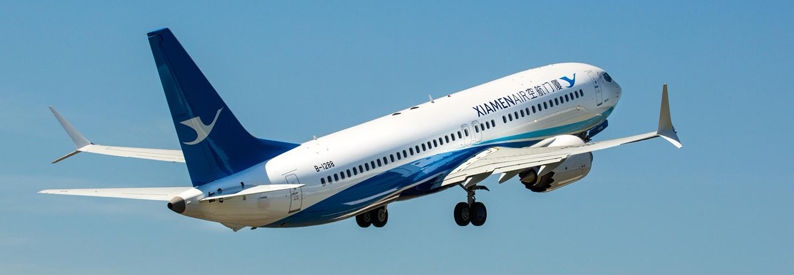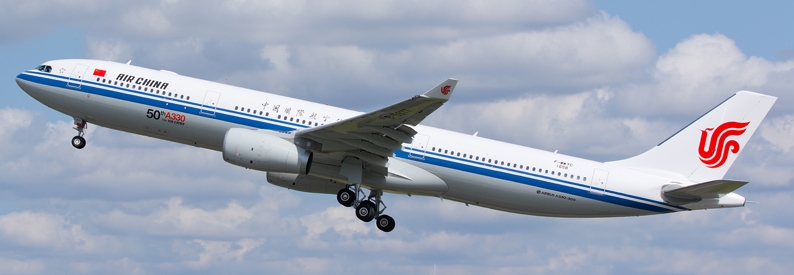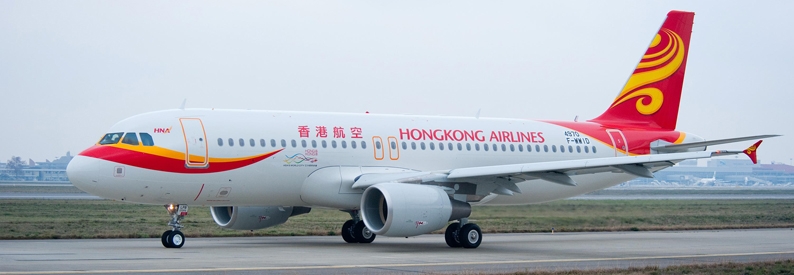
The projected return of Chinese international outbound traffic to 2019 levels has failed to materialise as the industry advances into the 2026 scheduling season. While domestic capacity within China has stabilised, international traffic flows across the Asia-Pacific region are displaying significant variance years after the pandemic.
Statements from major regional carriers, sent to ch-aviation, and data from the International Air Transport Association (IATA) all indicate differing tactics. Faced with yield dilution and geopolitical headwinds, some airlines are maintaining defensive postures, cutting capacity to protect load factors, while others are actively redirecting capacity to higher-growth markets such as India and Vietnam, or capitalising on specific visa-waiver opportunities.
Regional yield pressure deepens
The broader context reveals a challenging operating environment, even before the industry faced rising jet fuel costs and uncertainty amid the Iran war. IATA's annual review for 2025 notes that, while global passenger traffic rose 10.6% in 2024, the Asia-Pacific region faced acute yield pressures, with airfares falling at the fastest pace globally.
This decline was driven by overcapacity in the Chinese market and a persistent bottleneck in flights to the United States. Consequently, net profits for Asia-Pacific carriers were estimated at USD4 billion for 2024, representing a thin net profit margin of just 1.6%.
The recovery has visibly decelerated into late 2025, as discussed in IATA's air passenger market analysis for December 2025. Asia-Pacific airlines recorded a 6.3% year-on-year increase in revenue passenger kilometres (RPK), but this figure masks underlying weaknesses in key Northeast Asian corridors.
Domestic traffic in China remained robust through the end of the period, with load factors climbing to 84.2% for the full year. International flows, however, varied considerably. For the wider region, Asia-Pacific carriers achieved a record international load factor of 84.4% in 2025, while traffic between Europe and Asia surged 12.5% in December.
Northeast Asian carriers adjust
In North Asia, where traffic volatility is most acute, carrier strategies have split along diplomatic lines. Traffic from China to Japan contracted by 34% year-on-year in December 2025, a collapse attributed to geopolitical friction and a sluggish economic environment.
Diplomatic relations between the two countries fractured after prime minister Sanae Takaichi's hawkish remarks on Taiwan and Japan's nuclear stance triggered a series of dangerous military provocations and severe economic retaliations from Beijing.
The deterioration accelerated into early 2026, when Chinese carriers drastically reduced their Japan networks. Over 50 routes scheduled for February have been cancelled, including key city pairs such as Beijing Daxing International-Osaka Kansai and Chengdu Tianfu-Osaka Kansai.
The cuts followed Chinese foreign ministry travel warnings urging citizens to refrain from travelling to Japan, citing deteriorating public security, criminal cases targeting Chinese nationals, and earthquake risks. Multiple Chinese carriers, including Air China, China Eastern Airlines, and China Southern Airlines, have extended free refund and change policies until October 2026.
Statistics from the Japan National Tourism Organisation (JNTO) corroborate this prudence, as it revealed that, while full-year 2025 visitor numbers from China grew 30.3%, momentum collapsed in December, with arrivals plunging 45.3% year-on-year.
South Korean carriers, meanwhile, are capitalising on the diplomatic vacuum. South Korean tourism has benefitted from the souring China-Japan relations, as Chinese tourists flocked to the peninsula instead. Reciprocal visa policies drove South Korean visitors to China to 3.2 million in 2025, a 37% increase, while Chinese visitors to South Korea totalled 5.8 million, an 18.5% rise.
Korean Air reports a slowdown in corporate demand originating from South Korea but is leveraging flexible scheduling to capture an uptick in tourism supported by visa-free policies, moving away from fixed, long-term capacity blocks.
Asiana Airlines is pivoting towards aggressive expansion, directly taking advantage of the reciprocal visa-free entry policies. In early February, the carrier announced a 20% rise in its China network capacity for the summer schedule commencing March 29. This includes resuming daily services to Chengdu Tianfu and Chongqing and densifying trunk routes from Seoul Incheon to Beijing Capital (increasing to 20x weekly).
Southeast Asia pivots for better yields
In Southeast Asia, the divergence is driven by carriers seeking more profitable markets. Singapore Airlines Group, which operates 211 weekly flights to 22 Chinese destinations, maintains a notable presence in China. However, Singapore Airlines has explicitly identified India and Vietnam as its primary engines for future capacity growth.
IATA data supports this pivot but adds a note of caution. While India's GDP growth reached 8.2% in 2024, significantly outpacing China's 5% target, the market remains operationally volatile; Indian domestic traffic contracted by 3.5% in December 2025 due to weather, operational disruptions and, possibly, economic uncertainty. The trade association projects moderate growth in India's numbers moving forward.
Despite this, carriers are deploying seats to India to capture the growing middle-class travel segment, viewing it as a hedge against the stagnant Chinese market. The Vietnam National Authority of Tourism reports that India has emerged as one of its fastest-growing source markets with over 500,000 arrivals, effectively replacing the volume lost from the Chinese market.
Low-cost carriers have generally reported lower exposure to China markets and more aggressive capacity discipline. Cebu Pacific Air confirmed to ch-aviation that the airline currently operates a significantly reduced China network compared with pre-pandemic levels. The carrier previously operated 35x weekly frequencies to five Chinese destinations but now operates 5x-7x weekly frequencies to just two: Shanghai Pudong and Guangzhou.
The airline stated that it reallocated fleet capacity early on, deploying aircraft to various domestic and international routes where yields are more resilient. However, the carrier is monitoring the impact of the recently announced visa-free entry policy for Chinese nationals. "We are starting to see some activity in the form of inquiries and group bookings," the airline noted, adding that it retains the fleet flexibility to deploy capacity back to China should demand conditions improve.
This wariness aligns with broader inbound tourism data for the Philippines, where Chinese arrivals totalled approximately 260,000 in 2025, representing roughly 15% of the nearly two million arrivals recorded in 2019. The slowdown in tourist arrivals has also prompted royalair philippines, which has traditionally banked on Chinese tourism, to suspend passenger operations and focus on cargo, betting on the booming Chinese e-commerce industry instead.
Meanwhile, Thai AirAsia had suspended flights to Guangzhou, Shenzhen, Shanghai Pudong and Xi'an Xianyang by March 1, 2026, as reported by ch-aviation. The cuts reflect broader distress in Thailand's tourism sector, where Chinese arrivals plunged 30% in 2025, the sharpest decline among all source markets, according to the tourism ministry. Overall foreign tourist numbers fell 7.2% to 32.97 million, the first decline since 2021. In response, the carrier reduced China flights in its 2025-26 winter schedule while increasing India frequencies.
- Type
- Base
- Aircraft
- Destinations
- Routes
- Daily Flights