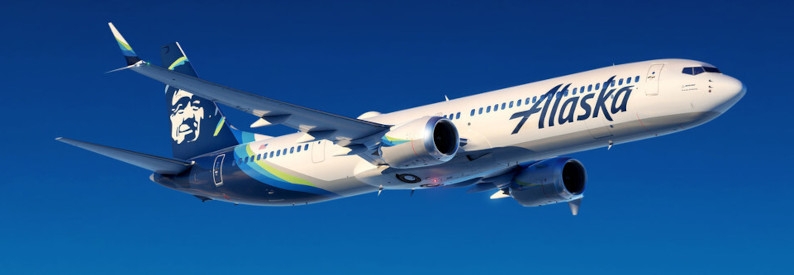
Alaska Airlines (AS, Seattle Tacoma International) will join American Airlines’ Atlantic and Pacific Joint Businesses, subject to approval and antitrust immunity from the US Department of Transportation (DOT), the companies announced.
Andrew Harrison, executive vice president and chief commercial officer at Alaska Airlines, said the carrier’s “Alaska Accelerate” programme is aimed at building a stronger and more global airline, with an expanded partnership with American forming part of that strategy.
“Joining these joint businesses would put Alaska on equal footing with its competitors by giving our guests more seamless access to international destinations,” Harrison said.
Alaska’s prospective entry into the joint businesses was first reported in April 2026. It would join the Atlantic Joint Business alongside American, British Airways, Iberia, Finnair, Aer Lingus, and LEVEL, and the Pacific Joint Business alongside American and JAL - Japan Airlines. Participation would allow Alaska to coordinate schedules and fares and share revenue on covered international routes.
Cargo revenue growth
Separately, as part of its Alaska Accelerate programme, Alaska Air Group has said it is seeking to increase the share of revenue generated outside the main cabin, including through premium products, international flying, loyalty, and cargo.
The group plans to more than double the size of its cargo business and sees a “clear path” to generating USD750 million in annual cargo revenue by 2030, supported by opportunities in Hawaii’s freighter operations, mail, international belly capacity, and broader network connectivity. Cargo revenue has already grown by around 60% since 2024, it said.
The company is also investing in premium-economy cabins across its widebody fleet and plans to introduce a new premium-oriented B737 MAX narrowbody product for transcontinental and other markets where demand supports it. Its new “premium reserve” cabin will debut in 2028 on Alaska’s B787-9s, B787-10s, and selected B737-10s, as well as on Hawaiian Airlines’ A330-200 fleet.
The updated B787-9 configuration will feature around 46% premium seating, up from 38% currently. At least twenty-five B737-10s will meanwhile feature twelve lie-flat “suites”, while the type will also carry twelve premium reserve seats. Hawaiian’s fleet of twenty-four A330s will begin receiving new interiors in 2028.
Across the group, Alaska Air Group is targeting diversified revenue, including premium, international, loyalty, and cargo, of close to 60% of total revenue by 2030, up from 53% currently.
- Type
- Base
- Aircraft
- Destinations
- Routes
- Daily Flights